The U.S. Army has developed a groundbreaking new process for rifling artillery barrels that could dramatically extend the life of America’s big guns while cutting costs and boosting performance — a combination that’s welcome news in today’s high-demand world of cannon warfare.
The cutting-edge process, known as electrochemical machining (ECM), was unveiled at the Army’s Benét Laboratories in New York, where engineers have spent years fine-tuning a method that carves the rifled grooves of 155mm howitzer barrels without the cutting tool ever scraping the metal.
Instead of grinding through hardened steel, ECM uses a fascinating combination of salt water, electricity, and chemistry to dissolve metal precisely.
The result is a pristine interior barrel surface — one far better suited for modern artillery that faces extreme levels of heat, pressure, and erosion in battle.
Christopher Mulligan, a materials engineer at Benét Laboratories, explained just how critical this process is.
“The protective coating applied to the bore is the primary defense against the extreme thermal and erosive environment inside a firing cannon,” he said. Without a flawless surface for bonding, those coatings fail, he added, leading to catastrophic barrel wear under the stresses of modern propellants.
Traditional rifling cuts, which physically grind grooves into the bore, leave micro-damage and imperfections that can weaken the barrel over time.
ECM eliminates that problem entirely, producing a chemically perfect surface that bonds seamlessly with modern high-resistance coatings.
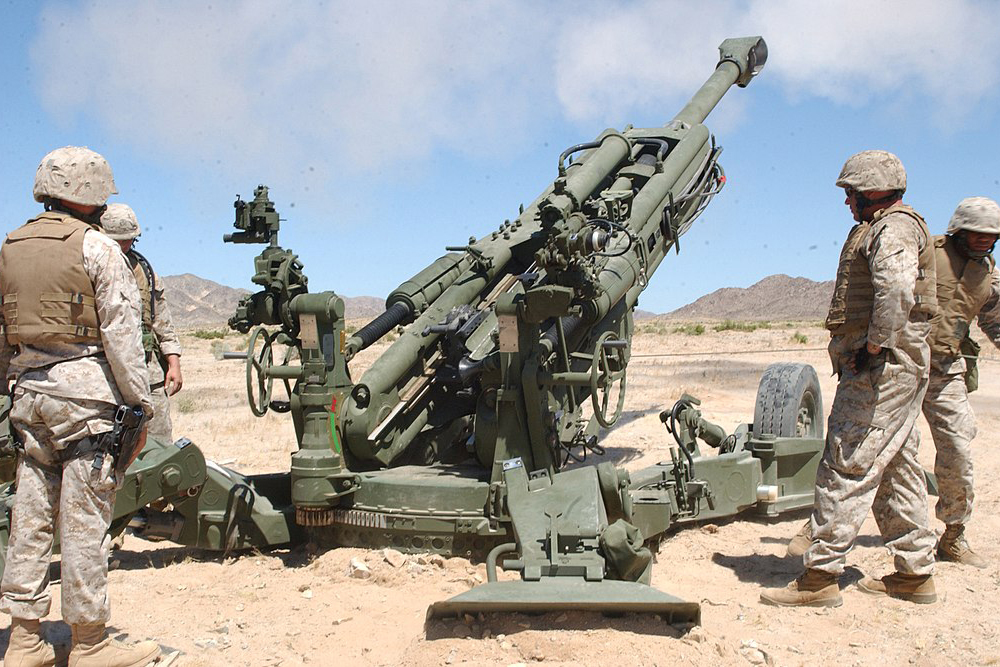
The ECM method can carve all 48 rifling grooves of an M284 cannon barrel in one swift operation, making it both faster and more precise than older mechanical processes. That speed translates into real-world readiness and cost savings for America’s arsenal of democracy.
Christopher Humiston, who leads the ECM project at Benét Laboratories, called the breakthrough “a significant advancement in cannon production.”
He emphasized that since the tool never physically touches the steel, “it experiences virtually no wear,” saving untold maintenance hours and replacement costs.
Humiston added that the flexibility of ECM opens new doors for precision design, allowing engineers to experiment with complex rifling profiles, including variable depth grooves that were previously impossible to manufacture reliably.
This gives the Army an edge in developing artillery that shoots farther and lasts longer in the field — exactly what’s needed as global threats evolve.
The project was made possible through collaboration between Benét Laboratories, part of the Army Combat Capabilities Development Command Armaments Center, and several private industry partners who brought advanced machining expertise into the fold.

It’s a shining example of what happens when the U.S. military teams up with American ingenuity to outpace adversaries.
The Army isn’t wasting any time turning this lab wonder into real-world production.
The legendary Watervliet Arsenal in New York, the oldest continuously operating arsenal in America and the Army’s sole manufacturer of cannon barrels, will soon install its own ECM machine directly onto the production line. That move marks a major milestone in modernizing the arsenal’s capabilities for the next generation of warfare.
Watervliet Arsenal has been manufacturing heavy artillery since before the War of 1812.
Now, thanks to a $1.7 billion congressional modernization investment following Russia’s invasion of Ukraine, the arsenal is gearing up to meet exploding demand for firepower — literally.
ECM could help produce barrels faster, stronger, and cheaper than ever before, ensuring U.S. artillery dominance stays unchallenged.
This development also comes at a critical time. With conflicts burning from Europe to the Pacific and America’s allies looking to bolster their defensive capabilities, reliable cannon manufacturing isn’t just a matter of efficiency — it’s a matter of national security.
The Army’s technological leap with ECM shows that innovation in America’s War Department isn’t slowing down under Secretary of War Pete Hegseth’s “lethality first” ethos.
It’s about protecting the lives of U.S. troops, preserving the strength of our warfighting tools, and keeping American artillery well ahead of any foe foolish enough to test it.
The new rifling technique is one more reminder that when pushed, American grit and ingenuity still lead the world — from the labs of Benét to the firing ranges of freedom’s defenders.