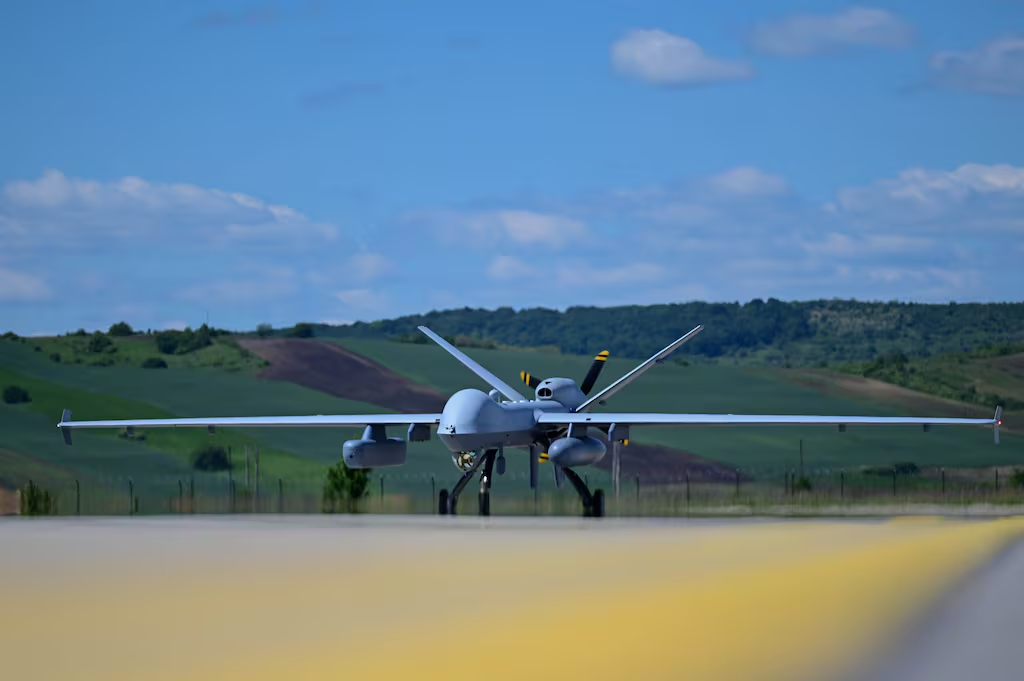
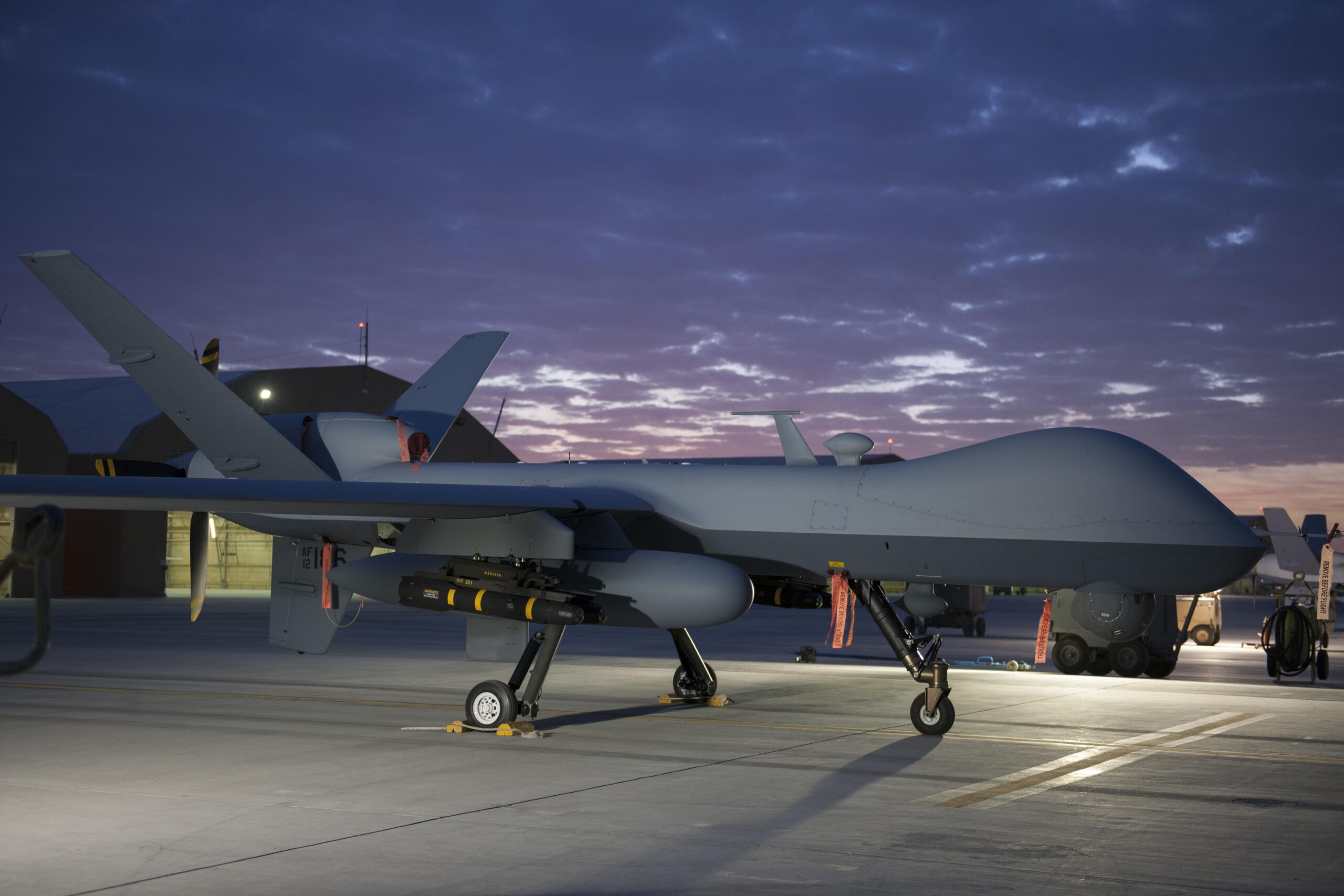
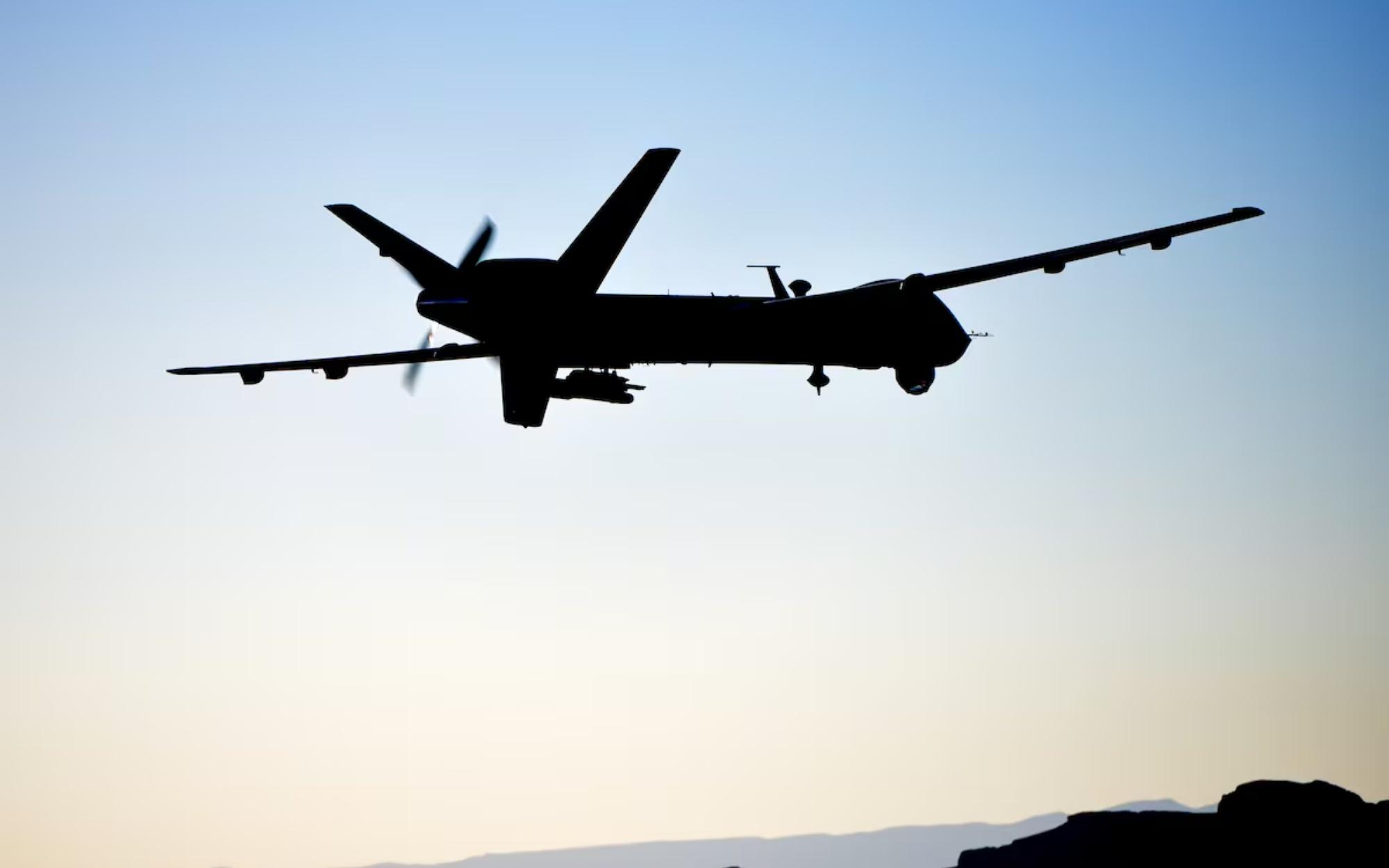
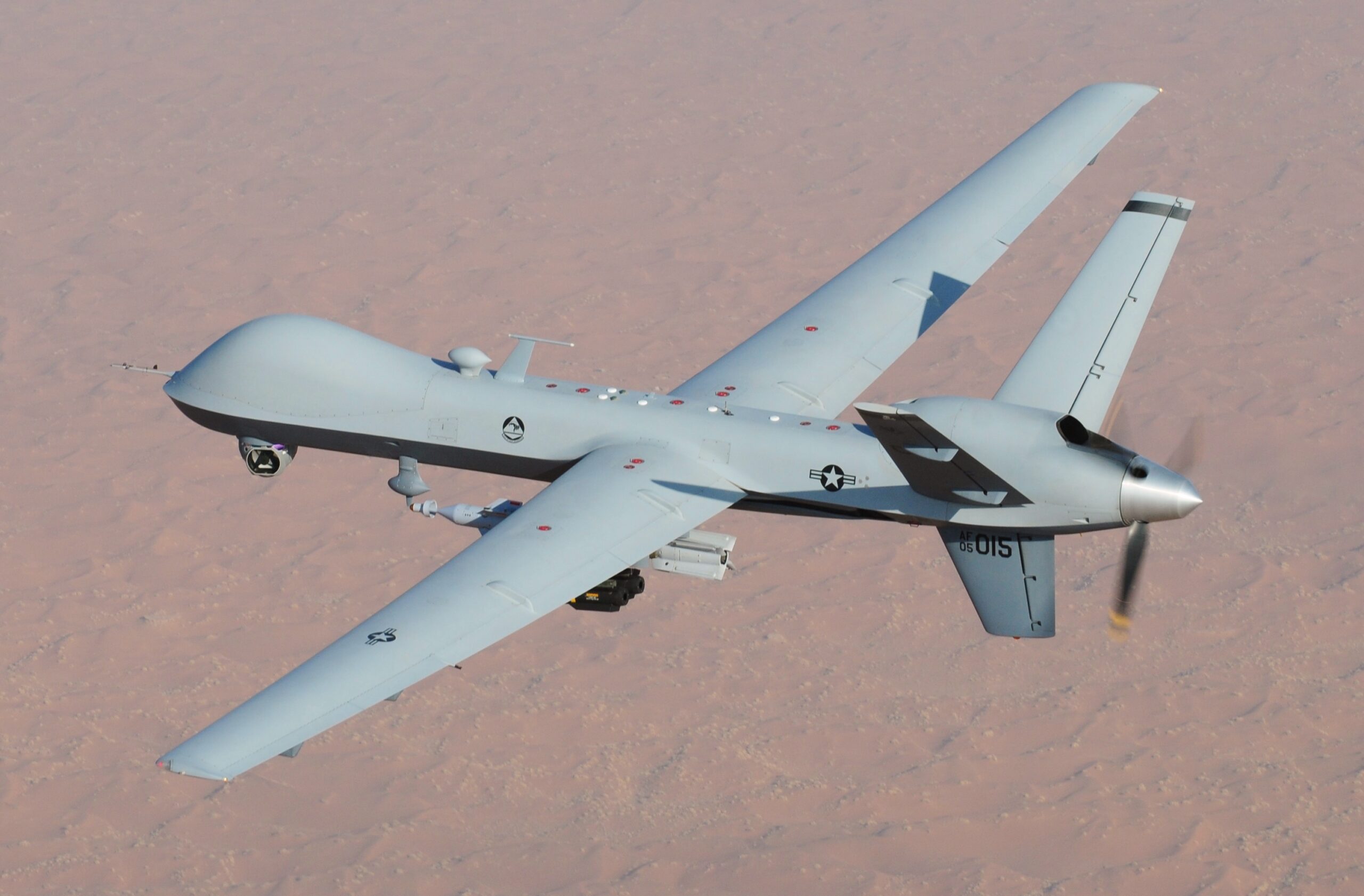
A malfunctioning MQ-9A Reaper became a $23 million battlefield demolition target after an electrical failure killed its newly installed engine during a lengthy mission over the Middle East last August.
The remotely operated aircraft had already spent roughly 19 hours in the air when its fuel system shut down.
Its crew fought for more than seven minutes to keep the powerless Reaper flying, but the aircraft was already doomed.
Operating from Ellsworth Air Force Base in South Dakota, the pilot guided the descending drone for nearly 10 minutes.
The crew made two attempts to restart the engine before executing what investigators called a “forced landing.”
The landing buckled the Reaper’s landing gear inside an undisclosed country within the region controlled by US Central Command.
Rather than attempt to haul the crippled aircraft out, American forces removed critical components and destroyed what remained.
The Air Force investigation stated that the aircraft was not recovered, but “based on the circumstances and the location of its landing, sensitive equipment was recovered from the [Reaper] and its remaining wreckage was demolished on site.”
The report offered no details about how troops eliminated the wreckage. American forces, however, commonly use explosives or airstrikes to erase disabled aircraft before enemy fighters, intelligence services, or Iranian backed militias can start picking through valuable technology.
That approach was also used after two MC-130 special operations aircraft were lost in April during the rescue of an F-15 weapons officer inside Iran. When sensitive American hardware cannot come home, reducing it to scrap is generally better than gifting it to the enemy.
Investigators traced the Reaper’s fatal failure to a damaged electrical wire within the fuel system.
The board concluded that the wire probably developed a short after rubbing against another component, a process described in the report as “chaffing.”
Once the damaged wire caused the fuel system to shut down, the crew had no realistic way to save the aircraft.
The new engine could not run without fuel, leaving the operators to manage the Reaper’s final descent and find the least disastrous place to put it down.
The mission was the drone’s first flight after receiving a new engine during a scheduled 3,000 hour maintenance overhaul.

Despite that timing, investigators found no proof that the engine replacement itself damaged the wire or caused the failure.
Col. Brian Desautels, president of the crash investigation board, wrote, “No evidence indicates that maintenance procedures executed were a factor in this mishap.” Desautels is a career C-130 rescue pilot who commands an Air Force rescue group at Moody Air Force Base in Georgia.
At least some maintenance on the aircraft was performed by private contractor Amentum.
The company provides “Comprehensive Engine Management System support; Aerospace Ground Equipment (AGE) and Ground Support Equipment (GSE) maintenance” for the Air Force’s MQ-9A fleet.
The investigation did not identify whether contractor personnel or Air Force maintainers completed the engine swap.
It also noted that the Reaper was not subjected to a Functional Check Flight or Operational Check Flight after the replacement.
Air Force regulations generally require those shakedown flights following engine changes on most crewed aircraft, but the rule does not apply to MQ-9s. The crash may prompt fresh questions about why a $23 million combat aircraft can receive a new engine and immediately head into a 19 hour operational mission without such a check.
The report also revealed an intense operational tempo for the pilot and sensor operator as US operations expanded around Iran.
Together, they had completed almost 60 missions during the previous 90 days, far more flying than many crews of manned Air Force aircraft typically record.
During the 30 days before the crash, the pilot flew 19 missions while the sensor operator completed 23.
Those numbers illustrate how heavily Reaper crews and aircraft have been employed throughout the region.
The Air Force maintains more than 200 MQ 9 aircraft, but roughly 40 MQ-9As have crashed since hostilities with Iran increased in 2025, according to the Aviation Safety Network. Most were reportedly shot down over Iran or Africa, making this loss a mechanical casualty rather than an enemy kill.
An earlier account incorrectly called the aircraft a Predator.
The aircraft involved was an MQ-9A Reaper, and once its engine went silent, its crew could only land it, strip it, and ensure America’s enemies received nothing useful.