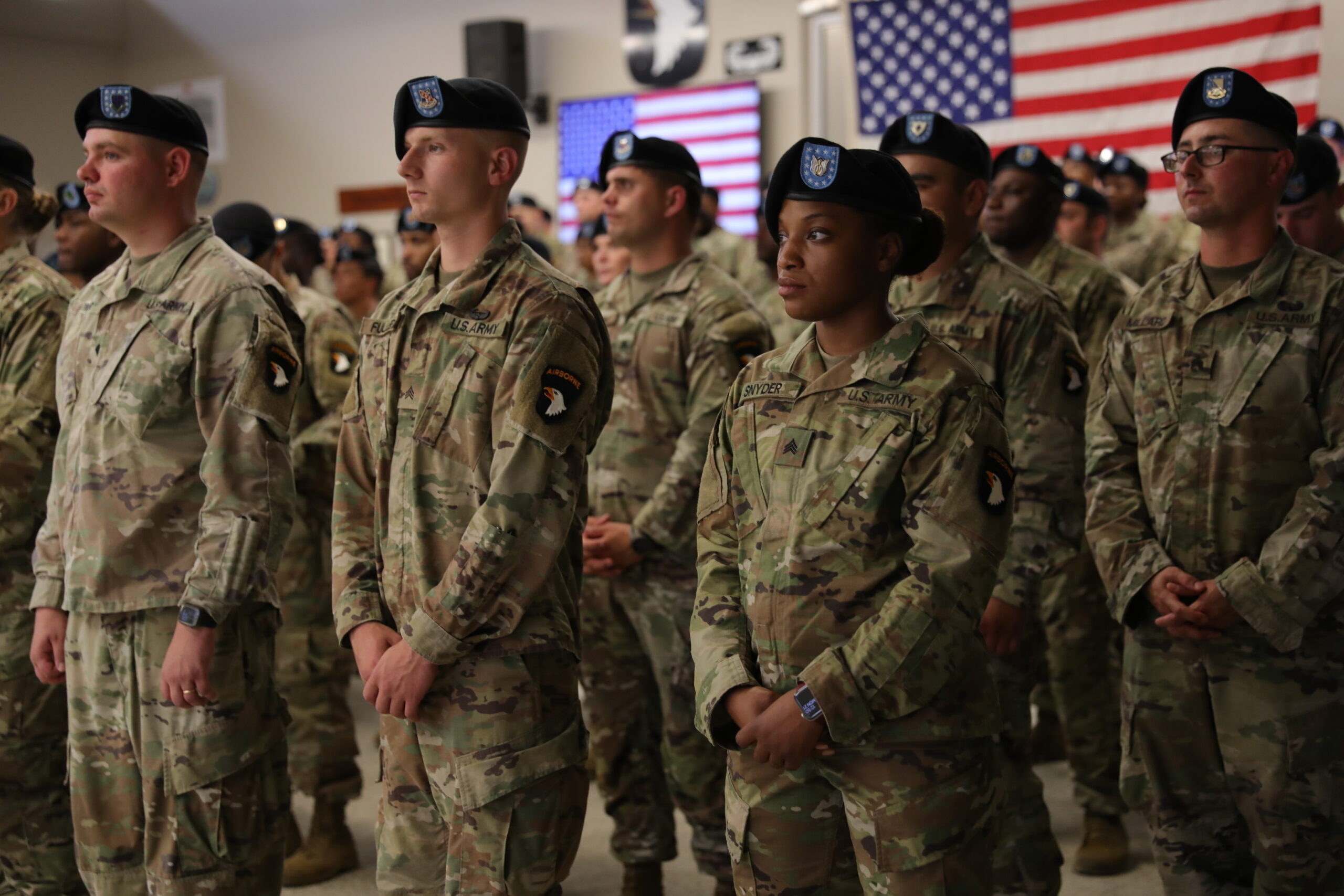
Soldiers from the 101st Airborne Division heading to the southern border are set to become some of the first troops to live in a new generation of 3D printed barracks at Fort Bliss, Texas.
The Army opened the first two buildings this week, giving transient troops a permanent housing option closer to their mission area instead of forcing them into long drives after exhausting border shifts.
The project is part of a $62.8 million contract with the construction firm ICON to build 10 barracks capable of housing 560 troops.
For soldiers rotating through Fort Bliss rather than being permanently assigned there, the new buildings are designed to provide practical, durable housing that is actually built around the realities of field duty.
Army officials said troops from the 101st Airborne Division’s 1st Mobile Brigade “Bastogne” unit out of Fort Campbell, Kentucky, will be among the first to use the new facilities.
Their deployment to the southern border was announced in June, as the military continues supporting border security operations after years of Washington pretending the problem would solve itself.
“In the coming weeks, when the next unit finishes a demanding shift on the border, they won’t have to drive an hour into the desert,” Maj. Gen. Curtis Taylor, commanding general of Fort Bliss, said in the Army release.
“Instead, they will return here, to permanent, energy-resilient, world-class housing just steps away from gyms, dining facilities and recreation areas.”
That may sound basic to civilians, but anyone who has spent time around the military knows quality of life details can make a serious difference for troops doing long, hot, repetitive security missions.
The new barracks are not luxury condos, of course, but they appear to be a meaningful step up from temporary arrangements that leave soldiers stretched thin after demanding days in the Texas heat.
Fort Bliss Garrison Commander Col. Michael Soyka showed off the new buildings in a video posted to the base’s social media channels.
Inside, the barracks feature two rows of bunk beds in an open bay layout, similar to what many service members remember from basic training, though with several upgrades that matter when soldiers are living there between shifts.
Each top and bottom bunk has its own power outlet, a small but welcome improvement over the old routine of troops having to share one plug with a bunkmate.
Lockers also separate the beds, adding a bit more privacy in an environment where personal space is usually treated like a rumor.
Soyka said the Army also increased the number of washers and dryers after earlier troop rotations made it clear that the older setup did not meet demand.
That is the kind of soldier feedback that should be acted on quickly, especially when troops are coming back from hot border duty with uniforms and gear that need constant cleaning.
The barracks include standard showers, but they also feature a smaller stall designed for washing off gear.
It is roughly the size of a dog washing station, but for troops working in heat, dust, sweat and field conditions, it is a practical addition rather than a gimmick.
“When you’re out there, you just get hot, you get sweaty,” Soyka said. “We actually added this so that soldiers can be able to wash their gear and be able to get ready for the next day.”
The first two buildings officially opened Tuesday, while Army officials said the printing phase for all 10 structures took just 58 days.
The full project is expected to be finished in the fall, giving Fort Bliss a larger footprint of permanent barracks for rotating units moving through the installation.

This is not Fort Bliss’s first run with 3D printed construction.
In 2025, the base opened three other 3D printed buildings, also built by ICON, to house troops before and after mobilization.
ICON, based in Austin, uses a massive Vulcan printer that weighs five tons and measures 16 feet by 47 feet wide.
The company builds with a concrete based material called lavacrete, which it says is designed to hold up against Texas humidity and temperature swings.
For the Army, the appeal is obvious because the service needs housing that can be built quickly, withstand harsh conditions and support troops without years of construction delays.
For the soldiers, the appeal is even simpler because a shorter commute, reliable laundry, personal outlets and places to clean gear beat the usual government afterthoughts.
The 101st Airborne soldiers heading into these barracks will still be doing hard work on a serious mission.
But at least when they come off shift, they will have a place built for the job instead of another reminder that the people making border policy too often never have to live with the consequences.