The United States Coast Guard has officially pulled its fast-response cutter squadron out of the Middle East and sent it to the western Pacific, marking a major strategic shift aimed squarely at countering China’s aggressive expansion across the Indo-Pacific.
After more than twenty years in the Persian Gulf, the six Sentinel-class cutters that formed Patrol Forces Southwest Asia are now operating in the Pacific theater—close to the world’s next big flashpoint.
The Coast Guard confirmed the move last week, announcing that the cutters will now focus on “protecting the homeland and maritime approaches including Guam and the Pacific Islands.” That language is significant.
It signals that the Pacific—specifically the South China Sea and surrounding waters—has taken center stage in Washington’s defense priorities under a renewed focus on great power competition.
The squadron, which includes the USCGC Robert Goldman, USCGC Charles Moulthrope, USCGC Glen Harris, USCGC Emlen Tunnell, USCGC John Scheuerman and USCGC Clarence Sutphin Jr., has set up operations in Singapore and Subic Bay in the Philippines.
These locations aren’t random—they’re strategically positioned near contested sea lanes, Chinese outposts, and allied naval facilities.
Admiral Kevin Lunday, Commandant of the Coast Guard, said the transfer reflects the service’s long-standing adaptability in meeting urgent national needs. “The Expeditionary Cutter Squadron enhances the Coast Guard’s ability to deploy our forces in support of Combatant Commanders and national security objectives,” Lunday stated.
“Our expeditionary cutter forces provide Combatant Commands with uniquely capable maritime assets, leveraging the Coast Guard’s military and law enforcement authorities to advance U.S. national security objectives in the Western Pacific and Western Hemisphere.”
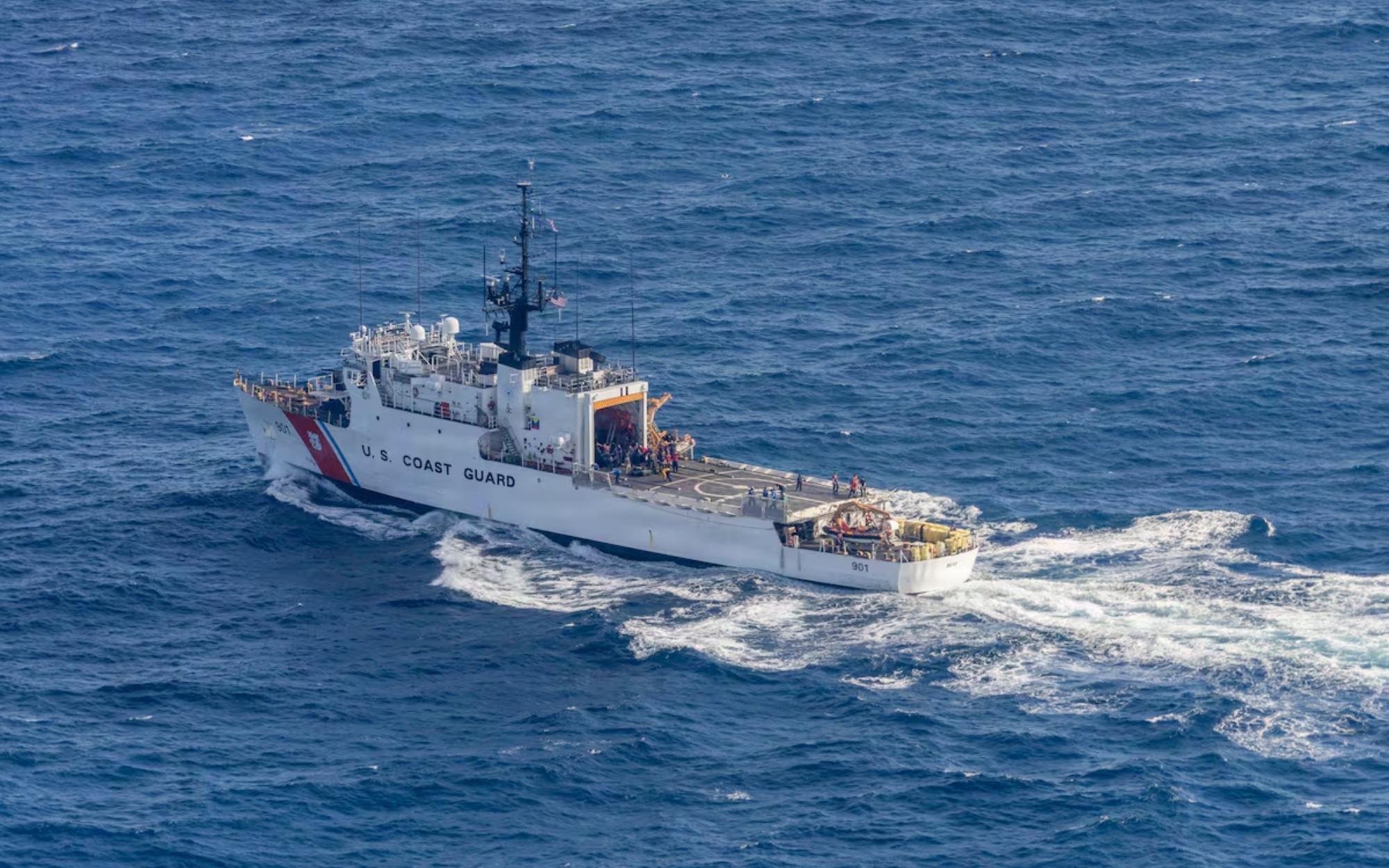
This move comes as part of a far bigger realignment. The U.S. military has been ramping up its Pacific posture, reinforcing Guam’s defenses, expanding rotational forces, testing anti-ship missile systems, and working more closely with regional allies like the Philippines and Japan.
The Coast Guard’s arrival adds another layer of capability to that effort, giving American commanders fast, flexible ships that can handle both military and law enforcement roles.
Patrol Forces Southwest Asia had been a key presence in the Persian Gulf since its formation in 2002 during preparations for the Iraq invasion. From its base in Bahrain alongside the Navy’s 5th Fleet, the unit played a crucial role patrolling the Gulf, conducting interdiction missions, and training local partners.
But as the U.S. winds down its presence in Iraq—with a full troop withdrawal expected by the end of September—the mission set that once justified the cutters’ presence there has effectively ended.
For over two decades, those ships patrolled one of the most volatile waterways on the planet. They interdicted smugglers, guarded shipping lanes, and worked side by side with Navy units to keep Iranian provocations in check.
Yet in the modern strategic climate, the biggest threats are now originating farther east. Beijing’s militarization of artificial islands, its harassment of Philippine and Vietnamese vessels, and its illegal claims over the South China Sea have reshaped the map of global priorities.
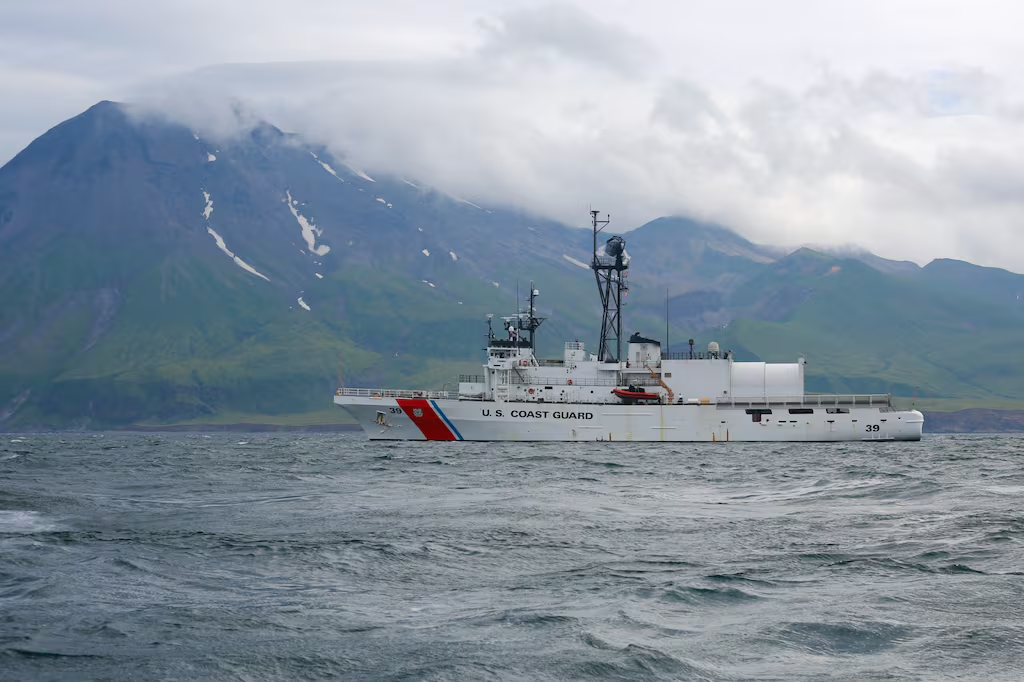
Bringing those same Coast Guard cutters to the Pacific allows the U.S. to apply steady pressure in contested waters below the level of outright warfare—a perfect fit for the Coast Guard’s unique blend of military presence and maritime policing.
The message to the Chinese Communist Party is unmistakable: America is not leaving the Pacific to Beijing’s control, no matter how much they expand their artificial outposts.
This redeployment also fits into a broader vision championed by strong national defense advocates. The Trump-era stance of “peace through strength” continues to guide American posture in Asia.
And with War Secretary Pete Hegseth driving a renewed focus on hard power and readiness, the Coast Guard’s shift underscores that the Pacific, not the Middle East, is now the arena where freedom will be safeguarded—or lost.
Moreover, working from Pacific bases like Subic Bay and Singapore offers flexibility that Middle Eastern deployments never could.
The cutters can respond to crises in the South China Sea, conduct joint patrols with allies, and even deliver humanitarian assistance—all without being confined to one narrow region.
This is not just a logistical move, it’s a signal of intent. Washington recognizes the new contest for dominance in the Indo-Pacific and is aligning its forces accordingly.
The days of endless Middle East deployments are coming to a close, replaced by the sharper contest of deterrence against communist China’s push for regional control.
The redeployment may mark the end of one chapter, but it is the beginning of another—one that demands vigilance, resolve, and unapologetic American strength.
The cutters that once kept the Persian Gulf safe will now steam through the Pacific’s contested waters, carrying the same mission they always have: to protect American interests, support allies, and keep the seas free from tyranny.