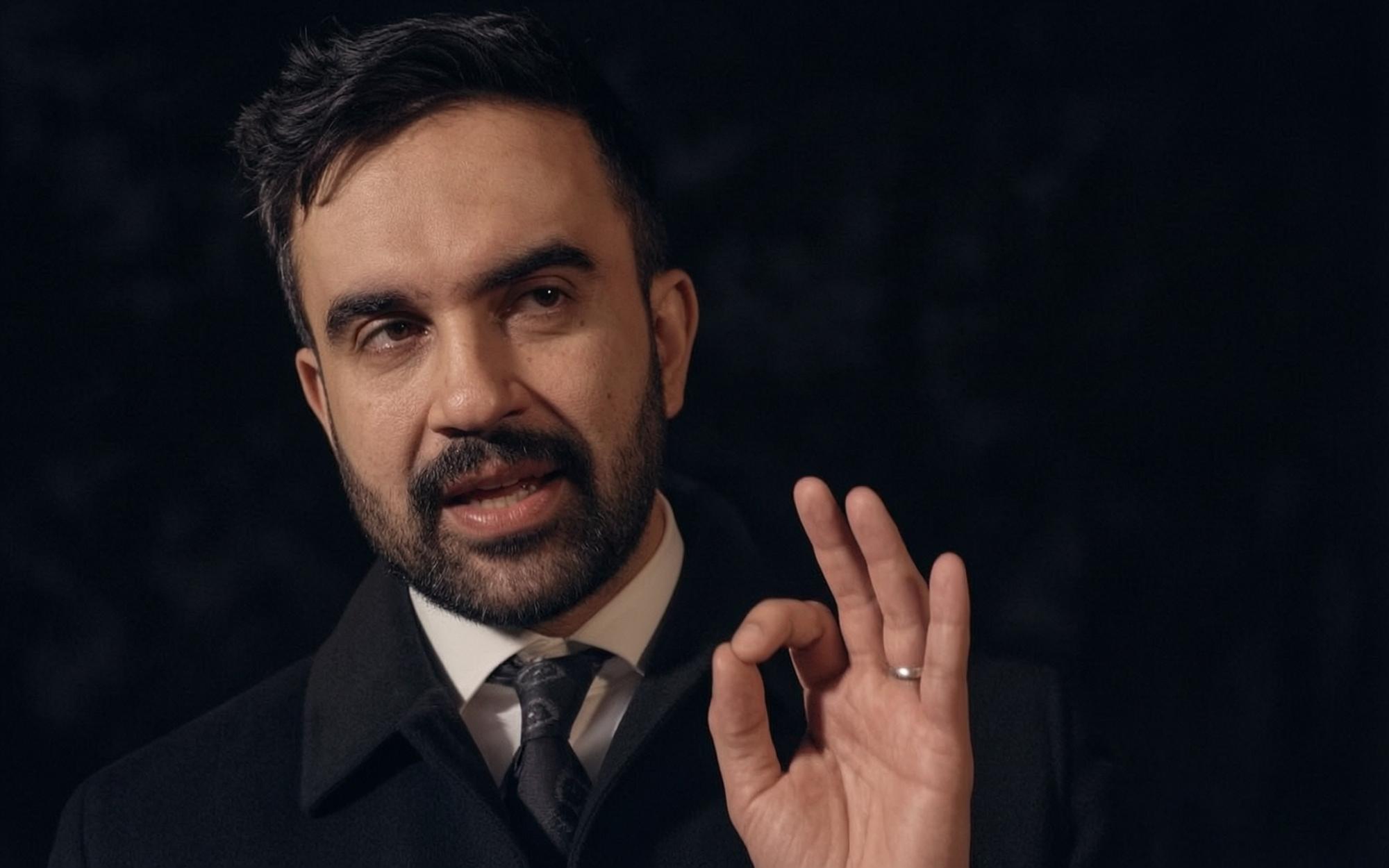
A University of California, Santa Barbara history professor used a socialist conference in Chicago to criticize Democratic Party leaders and call on activists to prepare for what he described as “war in the streets.”
As PJ Media reported, Butch Ware, an associate professor of history at UC Santa Barbara, made the remarks during Socialism 2026, a four-day conference held in Chicago from September 4 through September 7.
The conference brought together thousands of socialists and activists for panels and discussions covering Marxism, abolition, decolonization, anti-ICE organizing, working-class history, and other issues involving the political left.
Ware’s remarks were captured on video during the conference and circulated online.
According to recordings and reports about his appearance, he argued that Democrats could not be persuaded to adopt the revolutionary politics he advocates.
“The Democrats cannot be reasoned with. They must be destroyed,” Ware said.
He also urged activists to prepare for potential conflict, telling attendees they should be ready for “war in the streets.”
A recording of the speech shows Ware telling the audience that they were not prepared for such a conflict and emphasizing the importance of being prepared.
Ware has also argued that political figures identified with the Democratic Party’s left wing remain too restrained from his perspective.
In comments discussed after the conference, he pointed to New York City Mayor Zohran Mamdani and Michigan Senate candidate Abdul El-Sayed as examples of politicians who, in his view, are being used to contain more radical elements of the movement.
The comments came as socialist organizations seek to expand their political influence ahead of the 2026 midterm elections.
Socialism 2026’s organizers described the Chicago gathering as a forum for activists to discuss movements and organizing strategies.
The conference’s official program included sessions dealing with internationalism, abolition, worker resistance, healthcare, collective liberation, and other subjects.
Ware is a historian whose academic work focuses on Africa and Islam.
His UC Santa Barbara faculty biography says his research includes African history, Islamic intellectual history, slavery and abolition, and the relationship between race, religion and revolutionary thought.
He also has a political background outside the Democratic Party. In 2024, Ware was the Green Party’s vice-presidential nominee alongside presidential candidate Jill Stein.
He is currently running for governor of California. His campaign describes him as a professor, organizer, and political outsider.
Ware’s comments do not represent the official position of every socialist organization or every member of the Democratic Socialists of America.
California DSA, for example, has previously taken positions that distinguish between candidates it formally endorses, candidates it recommends and races in which it makes no recommendation.
The California DSA’s 2026 voter guide describes the current period as “a new era for democratic socialism” and says Mamdani’s election demonstrated that politics centered on working people, solidarity, collective action and democratic socialism is “not only popular but powerful.”
The organization has also emphasized that its formal endorsements are determined democratically by local chapters and involve commitments of time and resources to campaigns.
Its voter guide says some races receive no recommendation because no candidate meets the chapter’s standards for a progressive recommendation.
Mamdani’s political rise has become an important reference point for socialist activists. His election has been cited by California DSA as evidence that candidates associated with democratic socialism can build electoral support.
That electoral strategy contrasts with Ware’s argument that electoral politics alone may not be sufficient to achieve the revolutionary changes he advocates.
His comments also underscore tensions within the broader political left over the role of Democrats, electoral campaigns, and revolutionary organizing.
While some activists have pursued influence through Democratic candidates and elections, Ware has criticized what he sees as efforts to contain rather than advance radical politics.
The conference itself was presented by its organizers as a place for political debate and organizing rather than as a call for violence.
Socialism 2026’s official description says the gathering allows activists to share experiences and debate strategies for organizing around issues ranging from labor and immigration to abolition and socialism.
Ware’s statements about destruction, weapons, and “war in the streets,” however, have drawn attention because they go beyond ordinary campaign rhetoric and directly invoke political conflict.
There is no evidence that Ware’s statements establish the position of the Democratic Socialists of America as a whole.
They do, however, provide a public example of the disagreements within the broader socialist movement over how far political activism should go and whether electoral victories can satisfy activists seeking more fundamental changes to American political and economic institutions.