A small circle of Polymarket gamblers collected roughly $8 million by wagering on military operations, according to researchers who say the remarkable winning streaks may point to people trading on protected information. About 150 accounts repeatedly placed unlikely bets and somehow landed on the correct outcome nearly every time.
The Anti Corruption Data Collective identified the accounts as “the most likely potential insiders” in a report released Thursday.
Their success, researchers argued, is difficult to explain through ordinary luck, educated guessing, or the usual online casino bravado.
“Traders acting on specialized, nonpublic information possess an edge that is valuable only within a limited set of markets, and that produces win rates difficult to attribute to luck,” the researchers wrote.
They focused on accounts displaying unusually narrow interests and suspiciously accurate wagers.
The report selected bettors based on ”The concentration of their betting within less than 100 markets and two topics, and unusual accuracy (over 75%) of their longshot bets.”
In other words, these were not casual gamblers bouncing from elections to sports before occasionally wandering into national security.
The same organization raised alarms in April after discovering that “longshot” bets concerning military operations succeeded 52% of the time.
That rate was reportedly four times higher than the success recorded across other categories of prediction markets.
The new investigation examined 152 accounts whose behavior appeared to “support our hypothesis that they are the most likely insiders.”
Researchers labeled these bettors “orcas,” describing them as “highly specialized, incredibly successful bettors” who concentrate on a limited collection of military markets.
The orcas were compared with “whales,” meaning big spenders who roam broadly across the platform and attempt to “devour enormous profits.”
Those players frequently profit at the expense of “small fish,” ordinary users who end up “losing out badly to the fat larger competition.”
Half of the suspected orca accounts placed their first unlikely military wager within two days of opening a Polymarket account.
They also committed larger sums more frequently to risky markets where the predicted event supposedly had little chance of occurring.

Collectively, the 152 wallets wagered about $2 million on military longshots and won 97.2% of the time, producing approximately $8 million in winnings.
That works out to more than $52,500 per wallet, which is quite a beginner’s streak for accounts that supposedly just wandered into the prediction business.
Despite wagering less overall than other groups, the orcas reportedly generated returns of 132%. Whales and small fish suffered losses reaching 2%, while at least half of the specialized accounts doubled their money.
The obvious concern extends far beyond whether a few gamblers found a clever way to fleece the crowd.
If military personnel or others with privileged access are betting on upcoming operations, they may be exposing American plans while creating a public trail that hostile intelligence services can monitor.
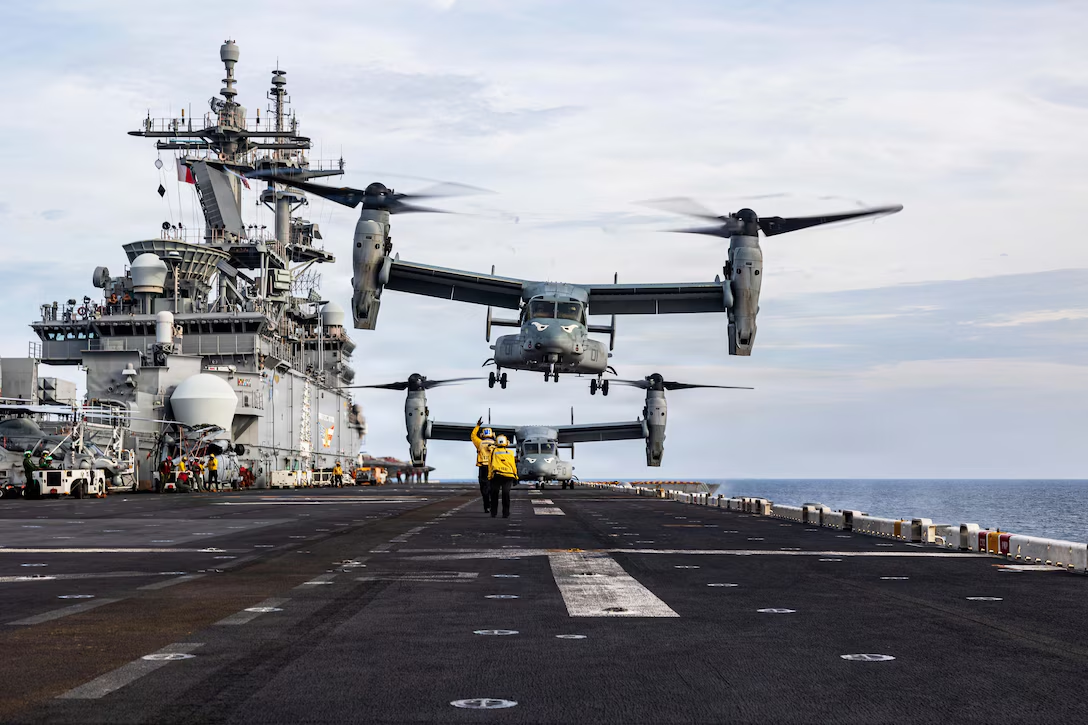
Researchers found that orcas often entered markets first, followed by whales, possible automated accounts, and smaller bettors. One cited example involved unlikely wagers placed around Feb. 16, 2025, followed by additional activity 48 hours before reported United States strikes on Iran in March.
“Because every Polymarket trade is visible on a public blockchain in real time, an insider betting on confidential military information is effectively broadcasting that information to foreign adversaries,” the collective warned. “Copycat behavior amplifies these signals, making them virtually impossible to contain.”
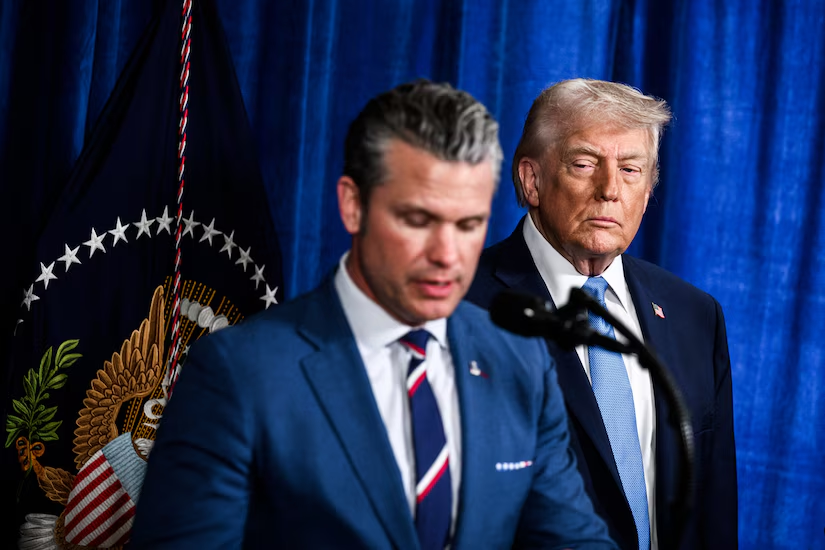
The findings arrive as American and Israeli authorities pursue cases involving military personnel accused of betting with sensitive information.
In April, Army Master Sgt. Gannon Ken Van Dyke, a special operations soldier, was arrested and accused of earning more than $400,000 from wagers involving Venezuela and the American raid that captured Venezuelan President Nicolas Maduro.
Van Dyke served aboard a Navy vessel that helped stage the operation, pleaded not guilty, and later asked a court to dismiss the case.
His lawyers contend prosecutors are stretching existing federal laws to cover conduct that Congress has not specifically addressed.
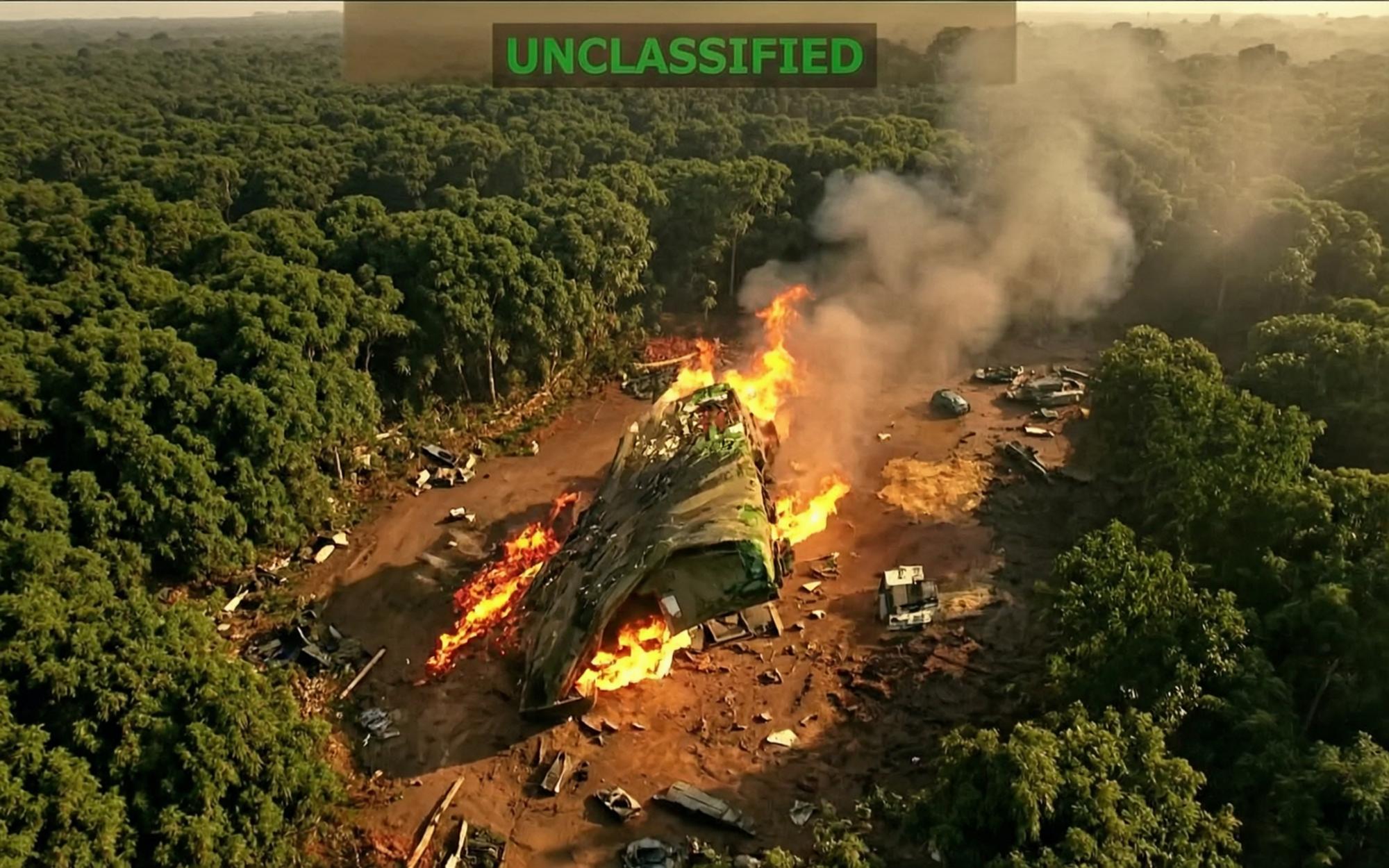
Israeli authorities have also arrested several people suspected of using classified information for Polymarket wagers involving attacks in Iran and Yemen.
One officer offered the eyebrow raising defense that “The entire Israel Air Force is involved in gambling,” a claim that hardly reassures anyone responsible for operational security.
Prediction markets may be fashionable, but classified military planning is not casino currency.
If the researchers are right, federal investigators and the Department of War have a serious counterintelligence problem to confront before the next secret operation becomes just another profitable tip for online bettors.