
Hazing in the ranks could soon be codified as a standalone criminal offense under the Uniform Code of Military Justice, marking yet another attempt by Congress to regulate military training culture from Capitol Hill instead of leaving it to the commanders who live it every day.
A new proposal buried inside the Senate version of the fiscal year 2027 National Defense Authorization Act would require the Secretary of War and the Joint Service Committee on Military Justice to decide if hazing deserves its own specific charge, or if it should be added as a modifier to other offenses under Article 93. Article 93 already covers cruelty and maltreatment of subordinates.
Currently, hazing-related incidents are prosecuted under Article 93, a charge that carries up to three years in prison and a dishonorable discharge.
But lawmakers want to go further, creating a bright-line statute that labels hazing as its own criminal act—potentially expanding the reach of military law into cultural territory that officers once handled internally.
The majority of Article 93 cases already depend on a clear superior-subordinate dynamic. Yet as retired Marine Corps lieutenant colonel and military defense attorney Guy Womack points out, hazing doesn’t always involve rank.
“This would make it more clear what is being outlawed,” Womack said. “Right now, they’re guessing what counts as hazing and what doesn’t.”
Womack, who has spent decades defending service members accused of misconduct, said many long-standing traditions have already vanished as political correctness seeped into the barracks.
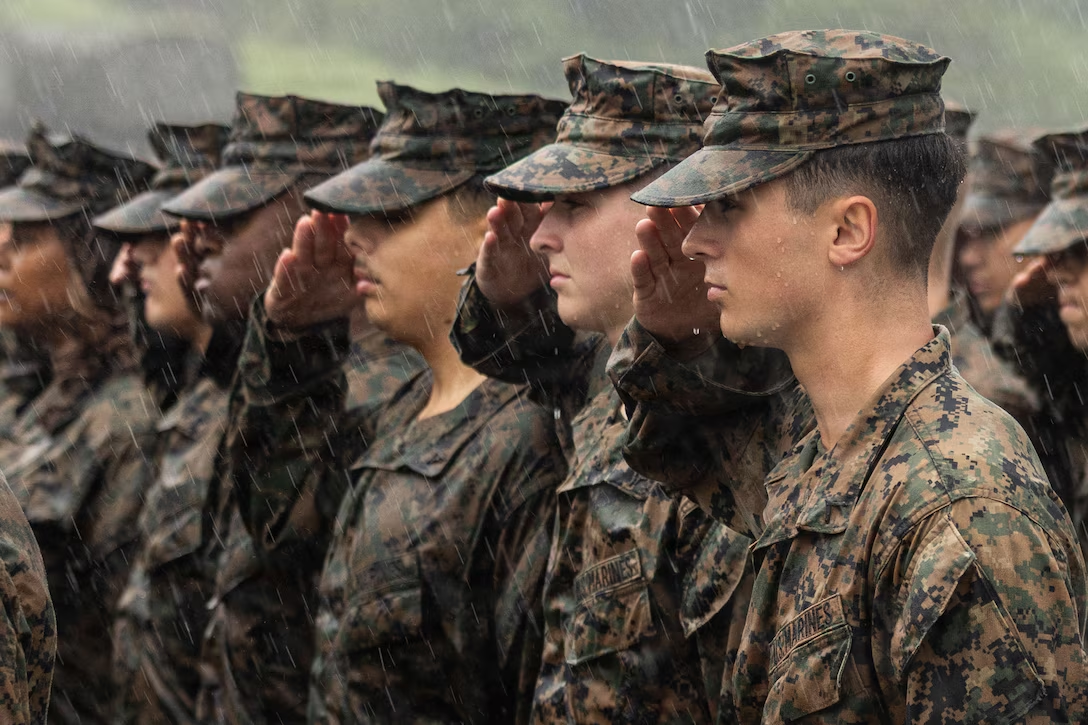
From the Marine Corps’ infamous “blood pinning” ceremonies to the Army’s rough-and-tumble unit initiations, practices that once bonded warriors have been replaced with HR-style investigations and PowerPoint briefings.
“It would hurt. It wasn’t fatal. It was painful,” Womack recalled, noting that Marines saw such rites as morale-builders, not abuse. The new legal movement could permanently outlaw such traditions, effectively sanitizing the culture of toughness that built America’s fighting force.
The same NDAA language would demand a formal War Department definition of “hazing,” something currently lacking across the services. Without it, commanders and troops have struggled to distinguish between motivational toughness and punishable abuse.
Codifying a definition could offer clarity in theory—but it also risks creating a bureaucratic checklist that punishes initiative and erases context.
The proposal is the brainchild of Sen. Kirsten Gillibrand, the perennial promoter of military “reforms” that always seem to edge closer to civilianizing the force.
She grabbed the idea from the House’s Harry Lew and Danny Chen Military Justice Reform Act, named after two service members who tragically committed suicide after experiencing alleged hazing in Afghanistan.

Democrats like Rep. Judy Chu of California have championed the bill as a moral crusade against what they call a culture of abuse. Chu called on the War Department to “confront directly” a so-called broader culture of hazing and bullying. Her framing conveniently ignores the difference between disciplined military toughness and criminal conduct, lumping them together as if they were the same thing.
In October 2025, Chu and several other lawmakers sent a letter blasting Secretary of War Pete Hegseth after his fiery speech at Quantico, Virginia. Hegseth announced that “bullying,” “hazing,” and “toxic” had been “weaponized and bastardized inside our formations,” robbing commanders of their authority and stripping the military of its edge.
He declared his plan to make basic training “scary, tough, and disciplined” again—words that sent the Pentagon’s civilian bureaucrats and liberal lawmakers into a frenzy.
“This does not mean they can be reckless or violate the law,” Hegseth reminded commanders, “but they can use tried and true methods to motivate new recruits, to make them the warriors they need to be.” That message hit home with field leaders frustrated by years of soft, politically driven regulations that prioritize sensitivity training over combat readiness.
Despite congressional pressure, Hegseth refused to retreat from his stance. In a follow-up memo, he ordered a review of all War Department definitions regarding hazing, bullying, and harassment.
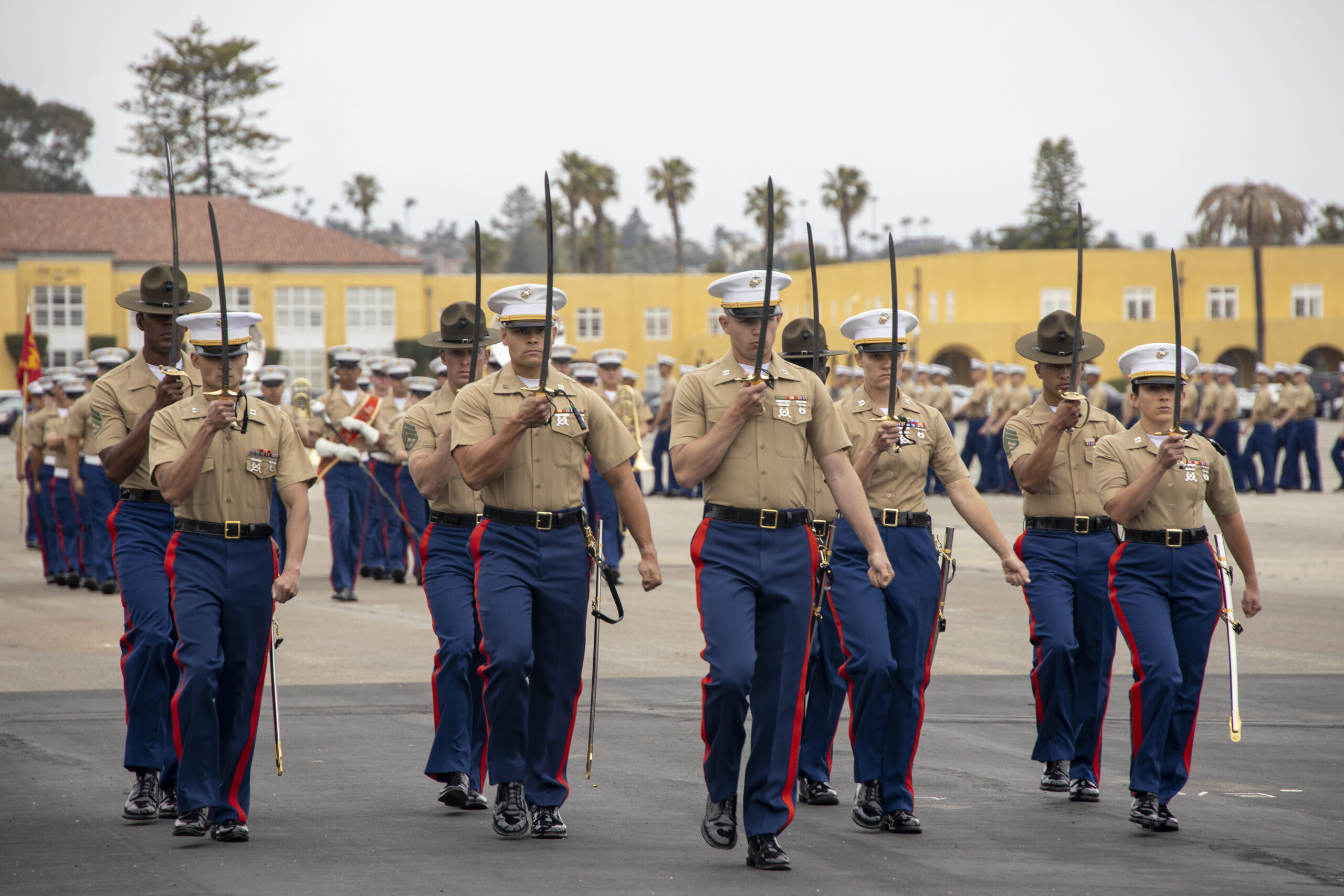
The Pentagon’s personnel office quickly responded with sterile language proclaiming that the department “unequivocally rejects hazing.” Washington translation: bureaucrats don’t trust commanders to lead troops without their oversight.
As negotiations continue between the Senate and House versions of the NDAA, this provision could become federal law within months. Congress rarely passes the NDAA before the fiscal deadline, but lawmakers will eventually reconcile the bills. Once that happens, the War Department will be forced to rewrite another set of regulations while troops wait for clearer answers about what they can—or can’t—do to instill grit in their units.
For now, the debate over “hazing” isn’t just about justice or discipline—it’s about whether Washington politicians or experienced commanders should define what tough training looks like. President Trump and Secretary Hegseth have both made it clear which side they’re on: the side of warriors, not bureaucrats.
If Congress keeps trying to legislate every bruise and barked order out of existence, America’s military risks becoming one big HR office in camouflage—polite, sanitized, and utterly unprepared for the wars that still require warriors.


How stupidly Woke can we get? Are the Liberals going to eliminate the harshness of basic training? It seems the left wing of the Democrat Party is purposely trying to weaken our military.