The U.S. Marine Corps is preparing to bring high resolution 3D scanning technology into the fight against damaged body armor.
The service wants a faster and more reliable way to identify hidden cracks before compromised plates reach Marines in the field.
According to a Marine Corps Request For Information due Oct. 2, the goal is to develop sensors that can “scan individual hard armor plates for cracks and delaminations.”
The inspection effort will focus on Enhanced Small Arms Protective Inserts and United States Marine Corps Lightweight Plates.
The planned Enhanced Armor Inspection System would rely on computed tomography scanners, commonly known as CT scanners.
These systems produce detailed 3D images and can reveal internal defects that might be missed by conventional 2D X ray equipment.
CT technology is already widely used for medical imaging and airport explosive detection.
Applying it to protective equipment would give armor inspectors a far more complete look inside ceramic and polyethylene plates without cutting them open or destroying them.
The Marine Corps plans to establish 10 CT inspection systems across several strategically important locations.
Six would operate in the continental United States, while Japan would receive two and Hawaii and Guam would each receive one.
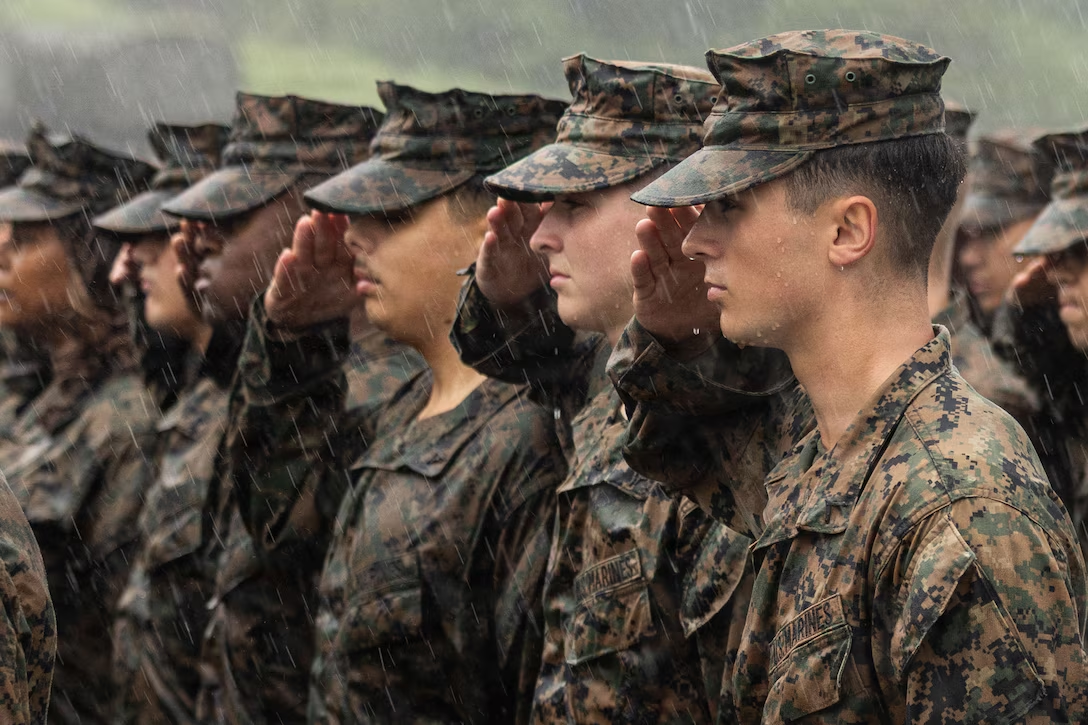
That distribution would place the equipment near major Marine Corps forces in both the United States and the Pacific.
With American military planners increasingly focused on Indo Pacific readiness, putting scanners in Japan, Guam and Hawaii is a practical move rather than another Pentagon paperwork exercise.
Current inspection methods are less sophisticated and can depend heavily on the experience of individual personnel.
A 2023 Small Business Innovation Research solicitation explained that ceramic damage is detected through X rays, while deformed polyethylene layers are evaluated by tapping the plate and listening to the resulting sound.
Under that tapping method, a chime indicates a good plate and a thud signals a bad one.
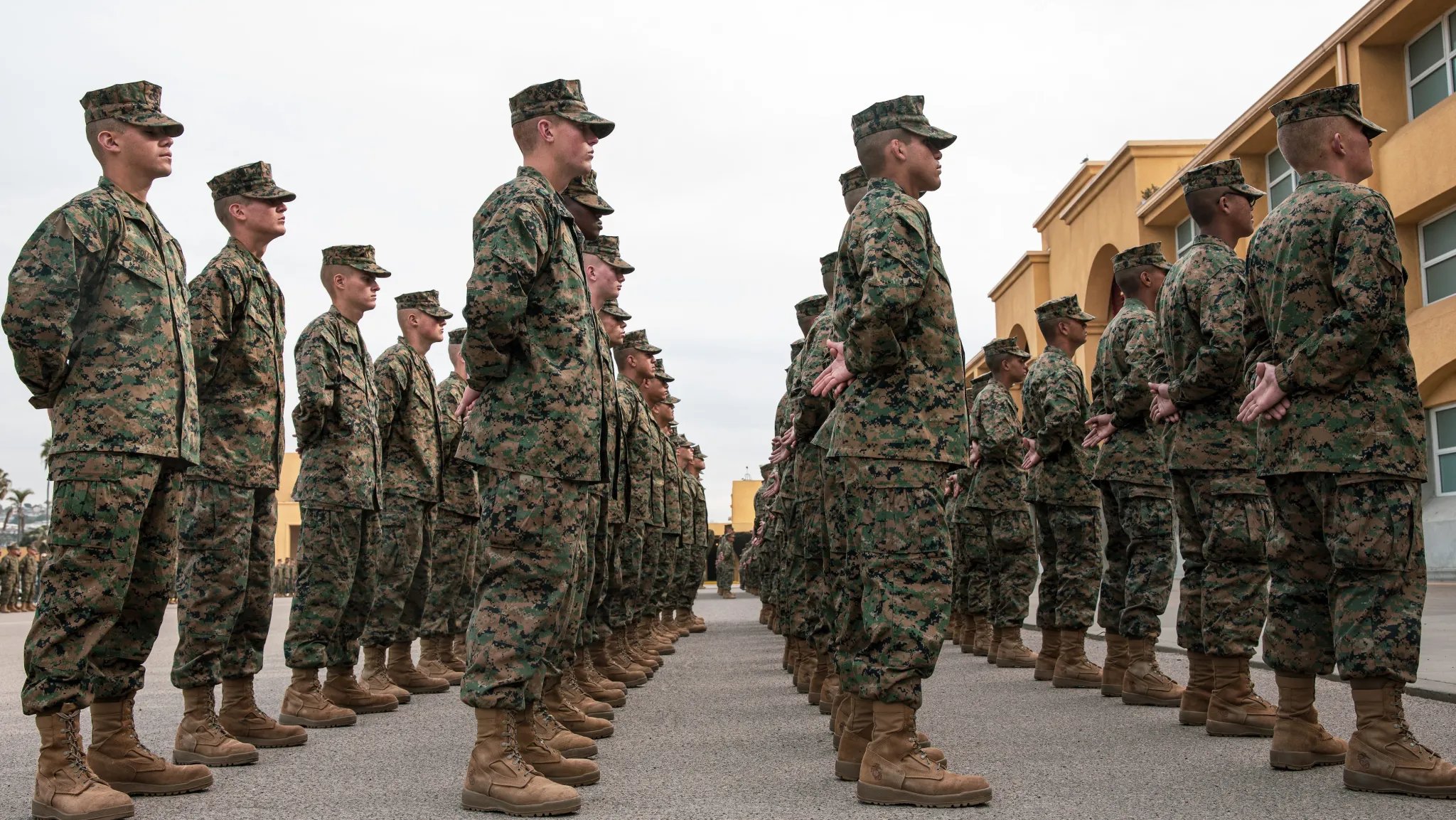
It is an old fashioned approach that can work, but Marines deserve something more dependable than turning lifesaving armor into a percussion instrument.
The earlier solicitation identified CT scanning as a possible alternative, but warned that “this method is extremely expensive and requires highly trained personnel.”
The latest request suggests the Marine Corps wants industry to overcome those obstacles through automation and commercially available technology.
The desired system should include an “automated material custom conveyance & sorting system, imaging system, and data processing/handling that is fully equipped with customized Automated Defect Recognition (ADR) software to meet the USMC’s requirements.”
In practical terms, the service wants plates moved, scanned, analyzed and sorted with minimal manual intervention.
Potential contractors must explain how many armor plates their systems can inspect per minute.
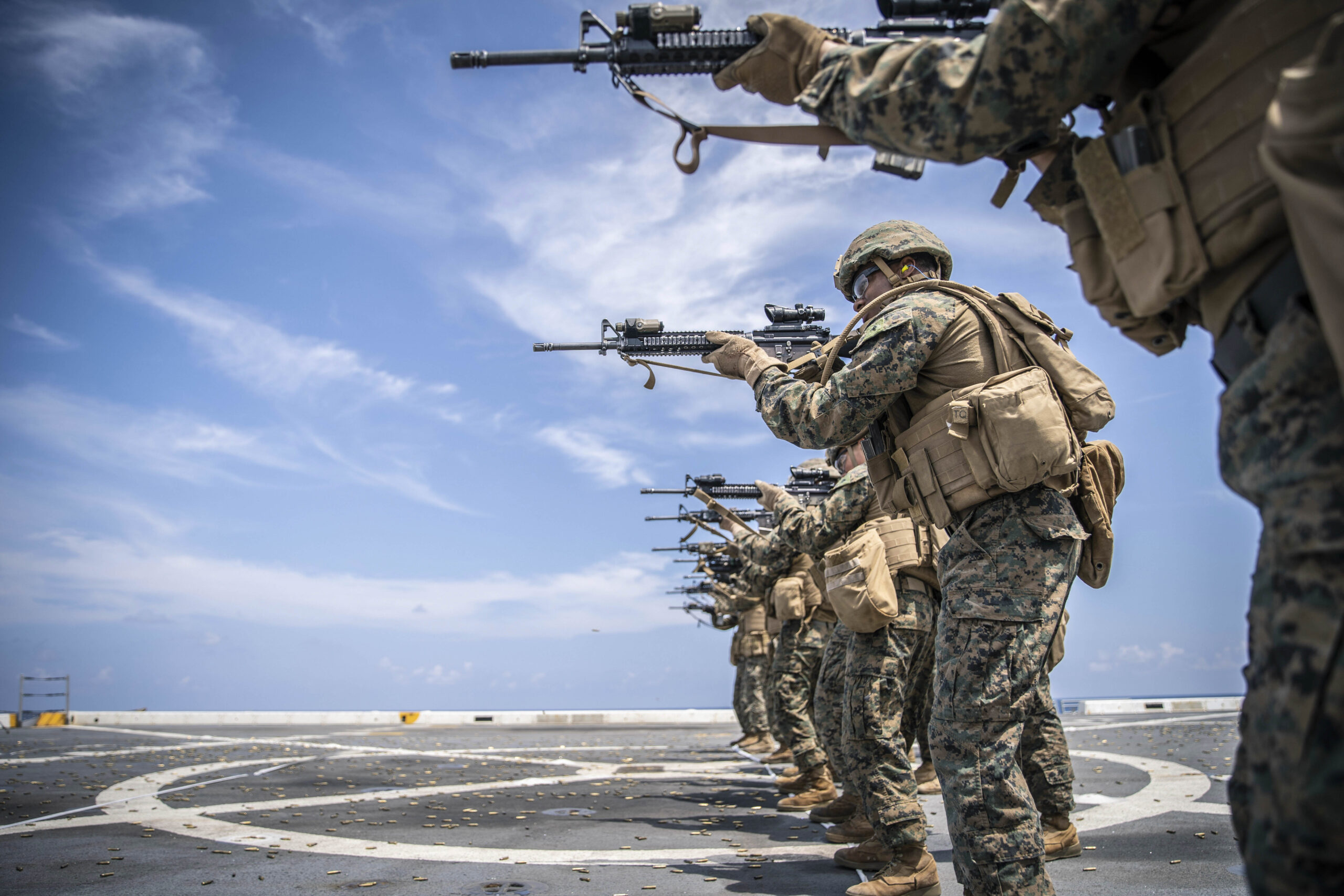
Speed matters because the Marine Corps must examine large inventories without creating a maintenance bottleneck that leaves units waiting for protective equipment.
Vendors must also describe how their scanners handle “materials with varying densities or compositions, such as the blend of boron carbide and silicon carbide, or the presence of metal crack arrestors.”
Those different materials can complicate imaging and require software capable of separating real damage from harmless variations in construction.
The consequences of weak testing procedures have surfaced before. In 2011, a Department of War Inspector General audit concluded that the U.S. Army had purchased 5.1 million ballistic inserts that might have contained defects.
The audit found that Army testing sometimes used armor plates of the wrong size, incorrect bullet velocities or inadequate assessments of weathering and altitude.
Those are not minor technicalities when the equipment involved may stand between an American service member and an incoming round.
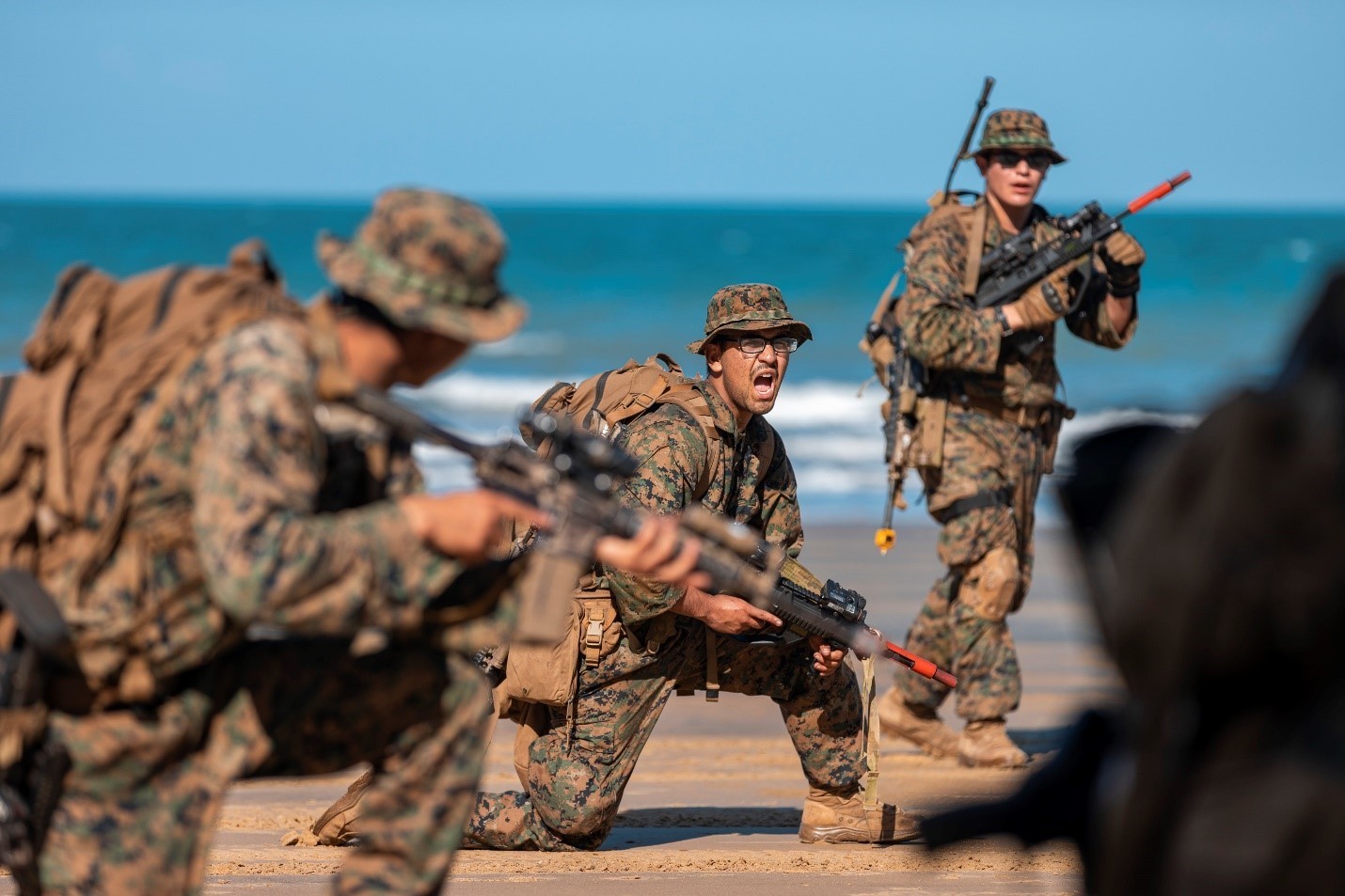
Courtesy photo by Cpl. Nicole Dorrett, Australian Defence Force
The Army responded that there was “no case in which the military’s body armor has failed to do its job in protecting troops in Iraq and Afghanistan.”
Even so, concerns about defective military armor have also appeared in Britain and Taiwan, along with reports involving American police departments.
A successful automated CT network could give Marine leaders better information about every plate moving through the supply system.
It could also reduce human error, accelerate inspections and keep damaged armor away from the Marines who depend on it when bullets start flying.