
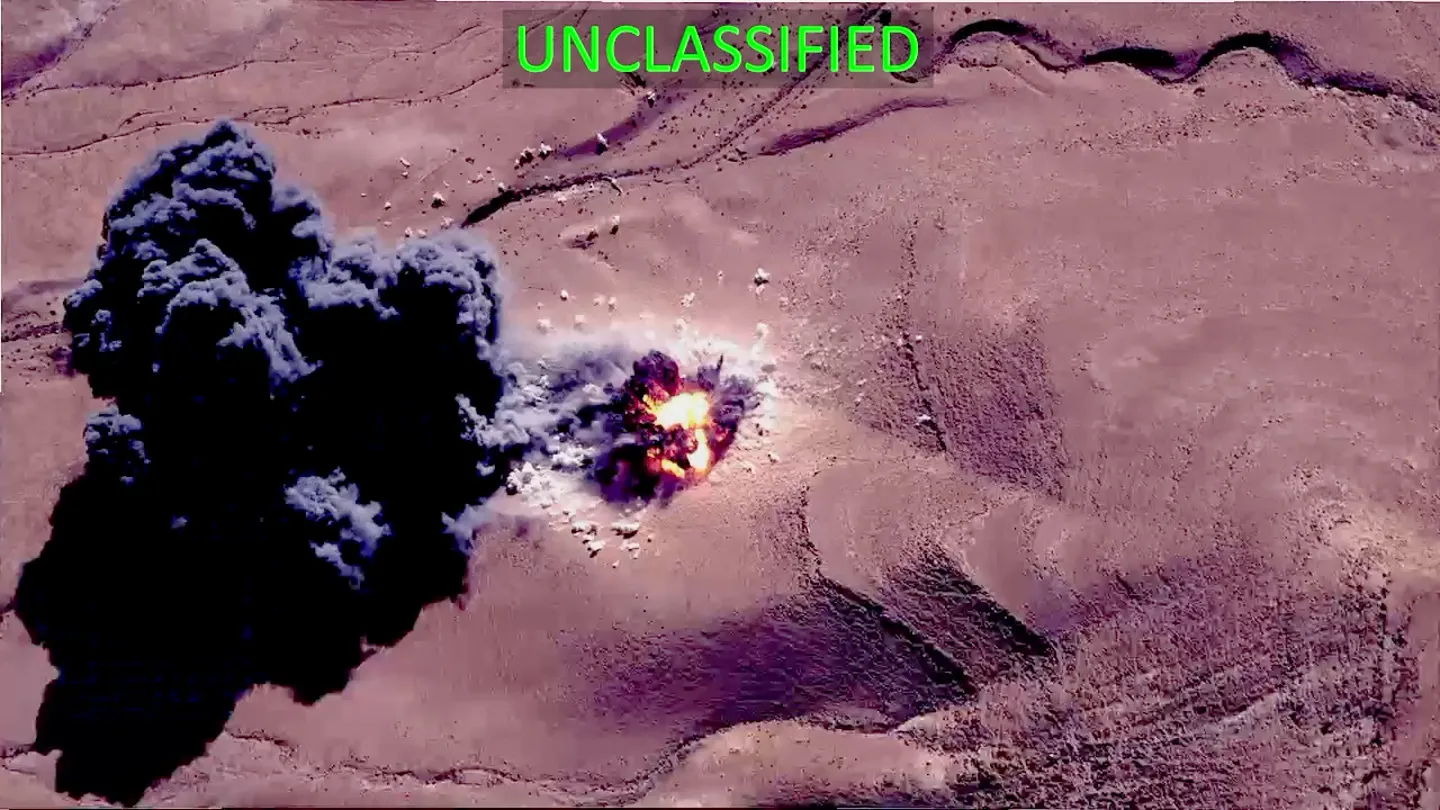
A senior Islamic State commander met his end last week when a precision U.S. airstrike in Syria struck its mark, Central Command confirmed Wednesday.
The strike, carried out on June 19, eliminated Ali Husayn al-Ulaywi, a major ISIS figure responsible for orchestrating operations across Eastern Syria.
The announcement comes at a critical moment, as American and allied forces continue hammering the remnants of ISIS while navigating the chaos of a fractured post-Assad Syria.
According to Adm. Brad Cooper, the CENTCOM commander, the mission underscores the unwavering U.S. resolve to root out the terrorist threat.
“CENTCOM and our partners remain committed to rooting out remaining remnants of ISIS to ensure its enduring defeat,” Cooper said.
“We will continue to defend the U.S. homeland, our service members, and allies and partners across the region.” His statement signals that, even amid shifting regional politics, America’s warfighters continue to keep their boots firmly on the neck of terrorists wherever they hide.
The successful strike also comes amid growing instability in Syria following the December 2024 downfall of longtime dictator Bashar al-Assad.
With Assad gone, a scramble has erupted among dozens of rival militias, warlords, and foreign-backed factions seeking control. This power vacuum opened new opportunities for ISIS fighters to reemerge, prompting a renewed push by CENTCOM to maintain order and eliminate threats before they can regroup.
Earlier this year, chaos along the front lines led to the escape of approximately 150 ISIS prisoners from Syrian custody, according to a recent Inspector General report. Many of those escapees were battle-hardened jihadists.
Their reappearance in the region raised alarm bells at the Pentagon and among allied intelligence services, who warned that released extremists could fuel another insurgent surge.
American and coalition forces quickly responded by securing the Panorama detention facility in northeastern Syria. In the weeks that followed, more than 5,000 ISIS detainees were transferred from Syrian compounds to Iraqi-run prisons.
The transfer was an enormous logistical achievement—one that showcased the continued coordination between CENTCOM, Iraqi partners, and local security forces in Kurdistan.
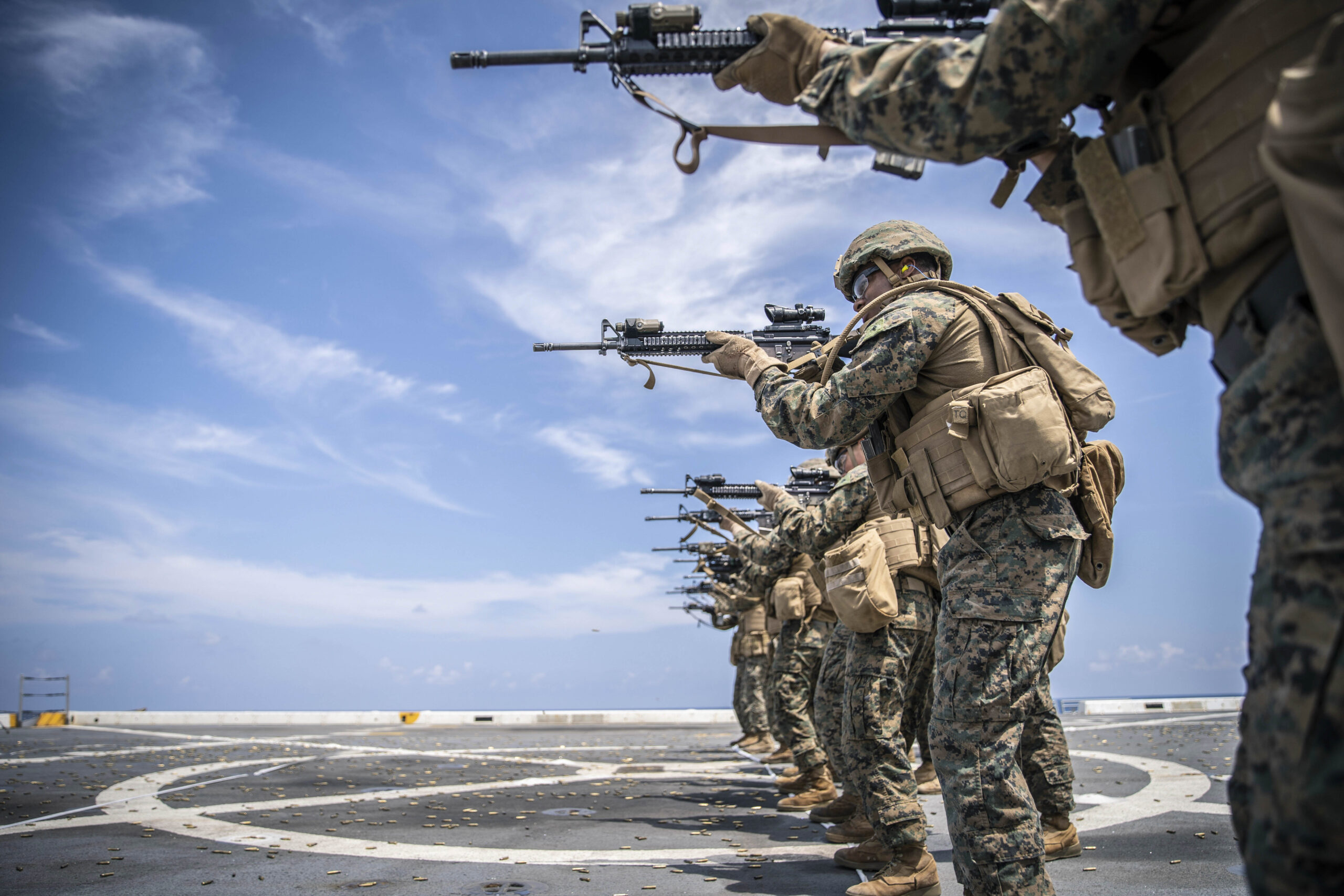
Despite these efforts, the same Inspector General report revealed that up to 20,000 residents walked out of the al-Hol displacement camp, a sprawling complex that once held ISIS family members and sympathizers.
Many vanished without surveillance, underscoring how fragile the situation remains. The exodus of known ISIS affiliates, combined with the escape of hardened fighters, has reignited fears that ISIS cells could attempt to regroup in rural Syria or along Iraq’s porous border.
Complicating matters further, CENTCOM recently confirmed that U.S. forces completed a long-planned withdrawal from their remaining Syrian bases in April.
After a decade of front-line deployments under Operation Inherent Resolve, American troops officially shuttered the last outposts, marking a new operational chapter. However, Washington has made it clear that precision strikes—like the one that killed al-Ulaywi—will continue as needed, no matter where terrorists scatter.
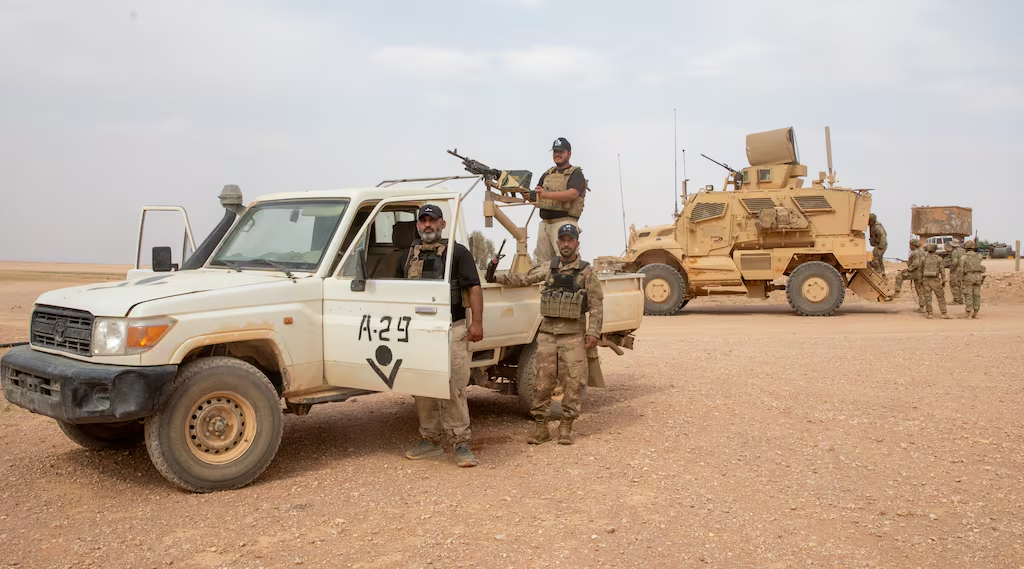
While some criticize the United States for closing its footprint in Syria, military leaders argue that leaner, more agile strike capabilities reduce risk while maintaining dominance from the skies.
CENTCOM’s targeting network remains unmatched, utilizing intelligence from drones, satellites, and special operations forces embedded with regional allies. The elimination of al-Ulaywi proves that the reach and lethality of American airpower remains as formidable as ever.
The strategic picture appears to be growing more complex by the day. The war’s shifting dynamics have produced fresh challenges, including the discovery of hidden chemical weapons caches left behind by Assad’s forces and various militia groups.
Those discoveries have fueled new fears that extremists could attempt to seize or sell dangerous materials on the black market if Western vigilance falters.

Even so, CENTCOM’s message is clear: the fight is far from over, and America will not allow terrorism to fester anew in the Middle East. Every successful strike like the one on June 19 reinforces that message.
The U.S. military remains the backbone of stability, a deterrent to chaos, and the shield protecting America’s homeland from ideologies that thrive on destruction.
For now, ISIS’s once grandiose dream of resurrecting a caliphate has been reduced to dust by U.S. precision strikes and persistent intelligence operations.
Al-Ulaywi’s death is another nail in that coffin, another sign that no matter how far terrorists run, the eyes of CENTCOM will always find them.


The more dead ISIS personall the better. It sems with ecery leader taken out five more show up. Eert Western country should be doing the same thing; hunting them down amd eliminating them; not putting them into prison.