The next generation of American sky dominance just got a serious jolt. Anduril Industries unleashed its newest war machine at the 2026 Farnborough Airshow in London — an autonomous tilt-rotor attack aircraft called “Thunder.”
With this debut, the U.S. military is one step closer to fielding unmanned rotorcraft designed to hunt, strike, and survive alongside human pilots in the most contested battle zones on Earth.
Unlike traditional drones or fixed-wing Combat Collaborative Aircraft, Thunder brings vertical take-off and landing capability to the fight.
Built with a hybrid-electric powertrain and partnered with Archer Aviation, the aircraft can hover like a helicopter, dash like a jet, and fight like a full-blown assault platform. In short, it represents the future of adaptive warfare — fast, flexible, and lethal without putting American lives on the line.
Anduril’s designers didn’t hold back when describing why Thunder matters. The battlefield, they note, has become one of the harshest environments in modern military history.
“The proliferation of drones in land warfare has brought maneuver to a stalemate,” Anduril warned, emphasizing how crews in platforms like the Apache are now under constant threat from cheap loitering munitions and ever-watchful enemy surveillance networks. Thunder’s job is to break that stalemate and restore U.S. air supremacy.
This new autonomous beast is fully capable of operating side-by-side with crewed aircraft or taking on missions solo.
The company claims Thunder can deliver “long range mass effects, fire support, ISR, search and rescue, and even anti-submarine warfare.”
That kind of multi-role versatility makes it a force multiplier that can slot into nearly any combat scenario, whether it’s peeling hostile tanks off American troops or tracking enemy submarines across restless seas.
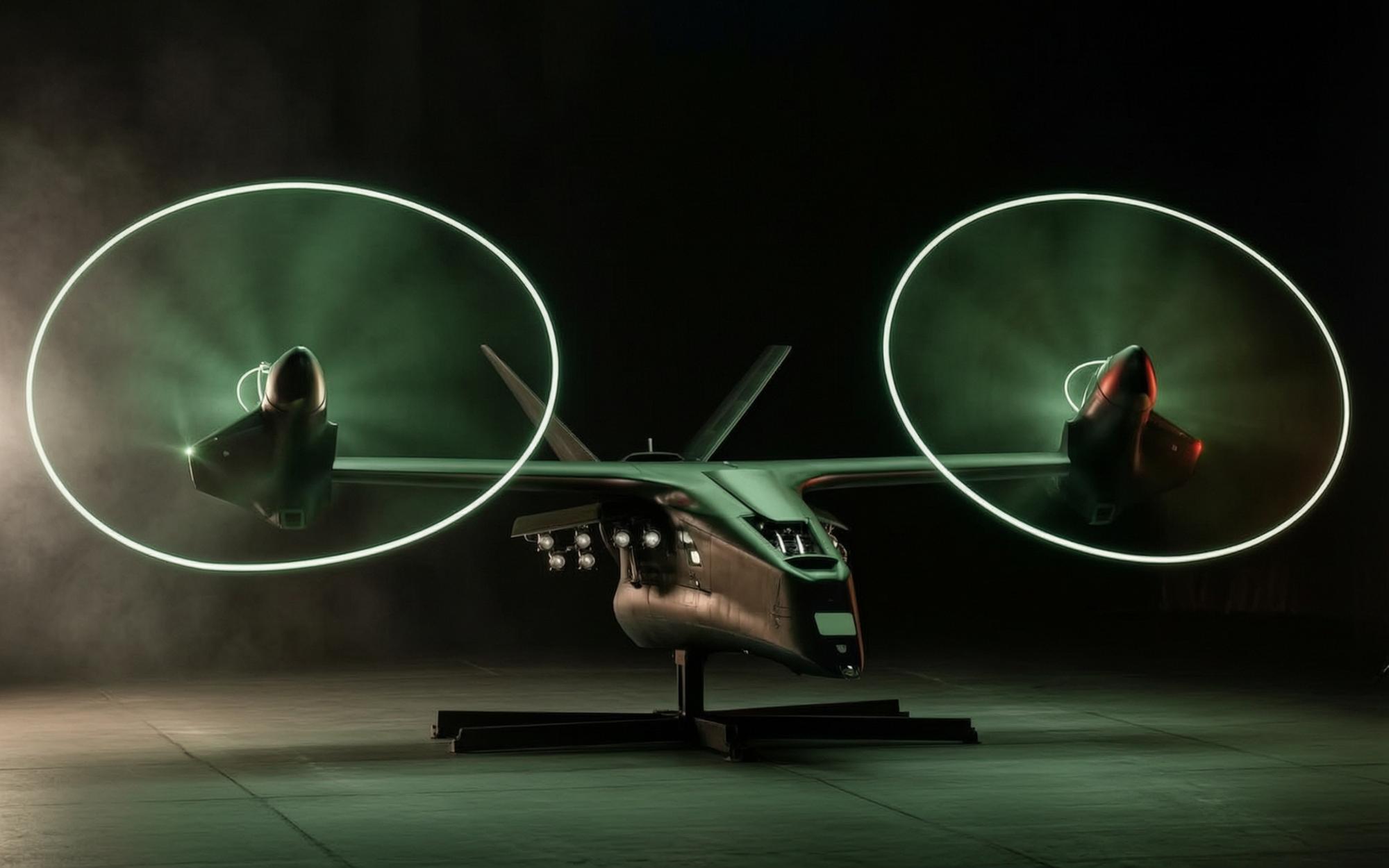
Armed to the teeth, Thunder packs a modular payload system with two internal bays — one in the nose, one main. Crews can load it with everything from air-to-ground missiles to electronic warfare pods, or even counter-drone munitions.
Anduril showed off an example configuration where a single Thunder could carry ten air-to-ground missiles, sixteen launched effects, or seventy-six 70mm rockets. That’s a staggering amount of strike power for an aircraft that can fit into a standard shipping container.
The company’s engineers highlighted how “teaming multiplies the mass that Thunder brings to the fight.”
In practical terms, pairing one manned aircraft with several Thunders effectively quadruples the firepower, endurance, and situational reach of a strike team. It’s the kind of transformational leap the Pentagon has been chasing for years but rarely achieved — until now.
Powered by Anduril’s signature Lattice for Mission Autonomy software, Thunder doesn’t need constant human oversight.
The onboard intelligence suite allows it to maintain formation, avoid collisions, and adapt during combat — while freeing human pilots to concentrate on high-level mission execution. In the words of one Anduril official, this is about “putting humans back in command, not in danger.”
More than just an armed scout, Thunder represents a fundamental shift in American warfighting philosophy.
It combines artificial intelligence with robust physical performance, ensuring the U.S. can dominate every corner of the battlespace — air, land, or sea. Gone are the days when adversaries could simply rely on cheap drones or static air defenses to blunt the tip of the spear. Now that spear will strike from multiple directions, faster than any enemy can react.
While Anduril has yet to announce a price tag, the company’s plan is clear: Thunder’s first flight is scheduled for 2027, and expectations are sky high.
With ongoing investments in autonomous warfare, the Department of War appears poised to integrate Thunder into joint combat operations as soon as testing proves its reliability.
For a U.S. military shifting hard toward unmanned teaming and persistent aerial dominance, Thunder will likely become a core piece of future Army and Marine aviation brigades.
Once deployed, it will let commanders fill the sky with precision strike options while keeping American crews out of harm’s way.
And for those who underestimated America’s ability to innovate and outpace China or Russia in autonomous warfare — Thunder just proved them dead wrong.
This is not some Silicon Valley gadget; it’s a battlefield storm, literally.
With autonomous systems like Thunder coming online under the renewed leadership of a War Department that prioritizes strength and deterrence, America is firmly reclaiming the technological high ground. And in the harsh calculus of combat, that means one thing: the storm is ours to command.