The United States Navy has unveiled an ambitious new set of requirements for its future carrier based Combat Collaborative Aircraft, offering industry a clearer look at the autonomous firepower it wants operating beside manned naval aircraft.
The specifications call for heavy weapons capacity, carrier compatibility, and a firm ceiling on unit cost.
The August 31 Request for Information does not disclose a required combat radius, leaving companies room to pitch their best combinations of range, fuel, and payload.
However, the Navy wants the aircraft to carry as much as five tons of weapons while costing no more than $30 million per unit.
Prospective contractors face a September 18 response deadline.
They are being asked to “provide the maximum combat radius including weapons loadout, 30 minutes on station and reserve fuel for safe recovery that the proposed solution can perform.”
That wording makes clear that the Navy is looking beyond glossy renderings and laboratory promises.
Any serious proposal will need to show how far the aircraft can fly, how long it can remain over a target, and how safely it can return to the carrier.
Designs may include both internal and external weapons carriage. Still, the aircraft must carry “four weapons up to 2,500 pounds each externally throughout the target flight envelope and carrier certification flights,” giving the unmanned platform a potentially formidable strike load.
The Navy wants two prototypes capable of completing shore based and aircraft carrier qualifications within three years. That is a demanding timetable for any aviation program, especially one expected to combine autonomous operations, significant payload, and the unforgiving realities of carrier aviation.
According to the request, the prototypes should demonstrate “extended range and payload capacity, while minimizing deck footprint and integrating with established CVN infrastructure.”
In plain terms, the Navy wants more reach and more firepower without cluttering flight decks or requiring carriers to undergo expensive redesigns.
The CCA effort is intended to produce autonomous combat drones that can fly alongside manned carrier aircraft.
These unmanned wingmen could conduct missions in heavily contested airspace where advanced missiles, sensors, and enemy fighters increasingly threaten American pilots.
The Navy also views expendable combat aircraft as a way to absorb losses without sacrificing costly manned fighters or naval vessels.
The request warns that the “high cost and extended timelines required to replace manned platforms and naval surface combatants” can “limit the Joint Force’s capacity to absorb operational losses.”
That calculation reflects a hard battlefield reality rather than Pentagon PowerPoint fantasy. A force that cannot replace combat losses quickly risks losing operational momentum, while more affordable autonomous aircraft could provide commanders with additional mass and options.
The envisioned aircraft must be capable of conducting strike missions alone or alongside other unmanned platforms.
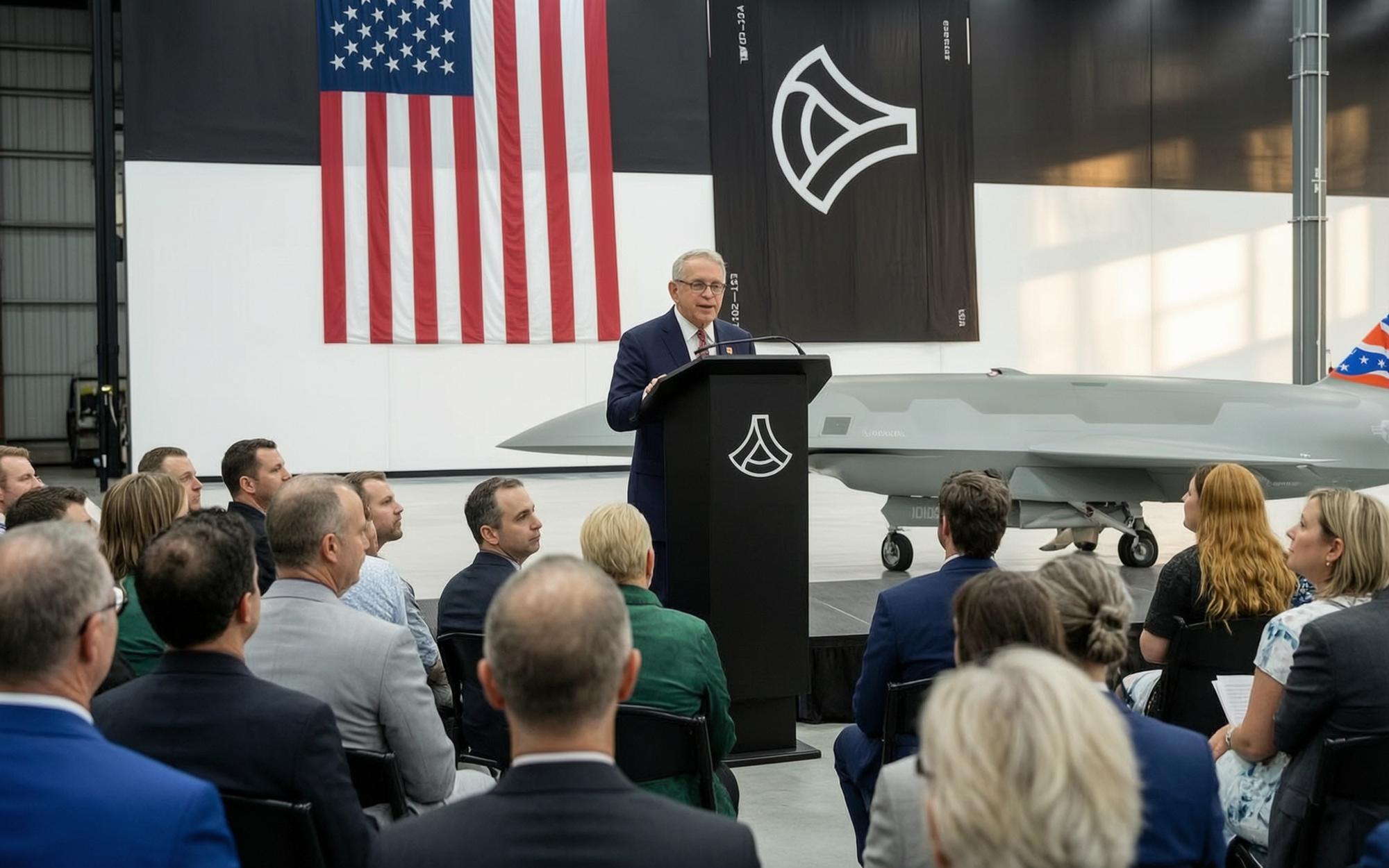
Concept images released by companies such as Anduril and General Atomics resemble compact stealth fighters, although the Navy has not selected a final configuration.
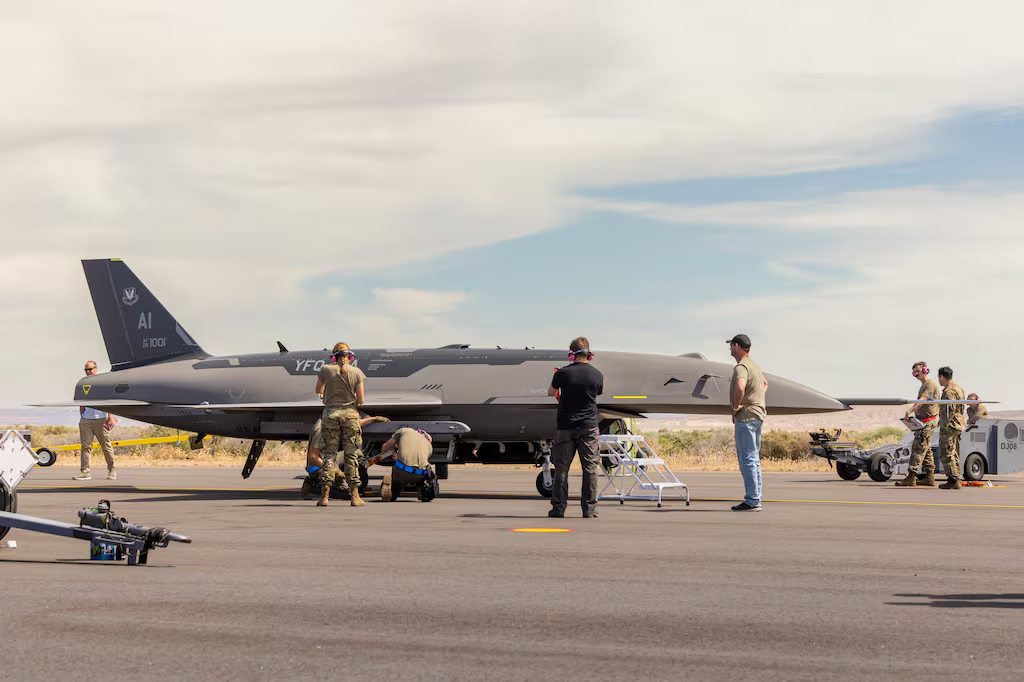
Whatever shape wins, it must work aboard both Ford class and Nimitz class carriers without forcing sweeping changes to embarked air wings.
The Navy requires catapult launches and arrested landings in conditions reaching Sea State 5, meaning waves can climb as high as 13 feet.
Existing carrier air wing personnel are expected to conduct flight operations, while the aircraft will be controlled through the MD 5 Unmanned Carrier Aviation Mission Control System already supporting the MQ 25 Stingray.
That approach could reduce training disruptions and keep another specialized bureaucracy from growing aboard ship.
“Physical dimensions, height, width, and weight thresholds must meet carrier deck, elevator and hangar bay requirements,” the request states.
Specialized handling equipment should be kept to a minimum, and the aircraft’s spot factor “must not exceed existing fourth generation fighter aircraft.”
The Navy eventually wants improved ways to service and move unmanned aircraft during demanding carrier operations.
Contractors were asked to propose “a deck handling system that can operate all carrier based unmanned air vehicles through launch, recovery and deck operations during EMCON conditions without increasing support equipment solutions or requiring any additional flight deck personnel.”
Affordability remains one of the biggest questions surrounding the program. Navy officials said in 2024 that an expendable drone should cost about $15 million, but the latest request seeks an interim manufacturing and supply chain plan for “reaching the Navy’s affordability goals of $30 million per unit.”
That higher figure could reflect more demanding requirements, inflation, production realities, or the cost of integrating heavy weapons and carrier systems.
Either way, the Navy is signaling that autonomous aircraft are moving from futuristic concept art toward the flight deck, where capability matters more than buzzwords.