The Pentagon has quietly pulled back its promise of vaccine choice, walking back War Secretary Pete Hegseth’s earlier move that allowed troops to make their own decision about flu shots.
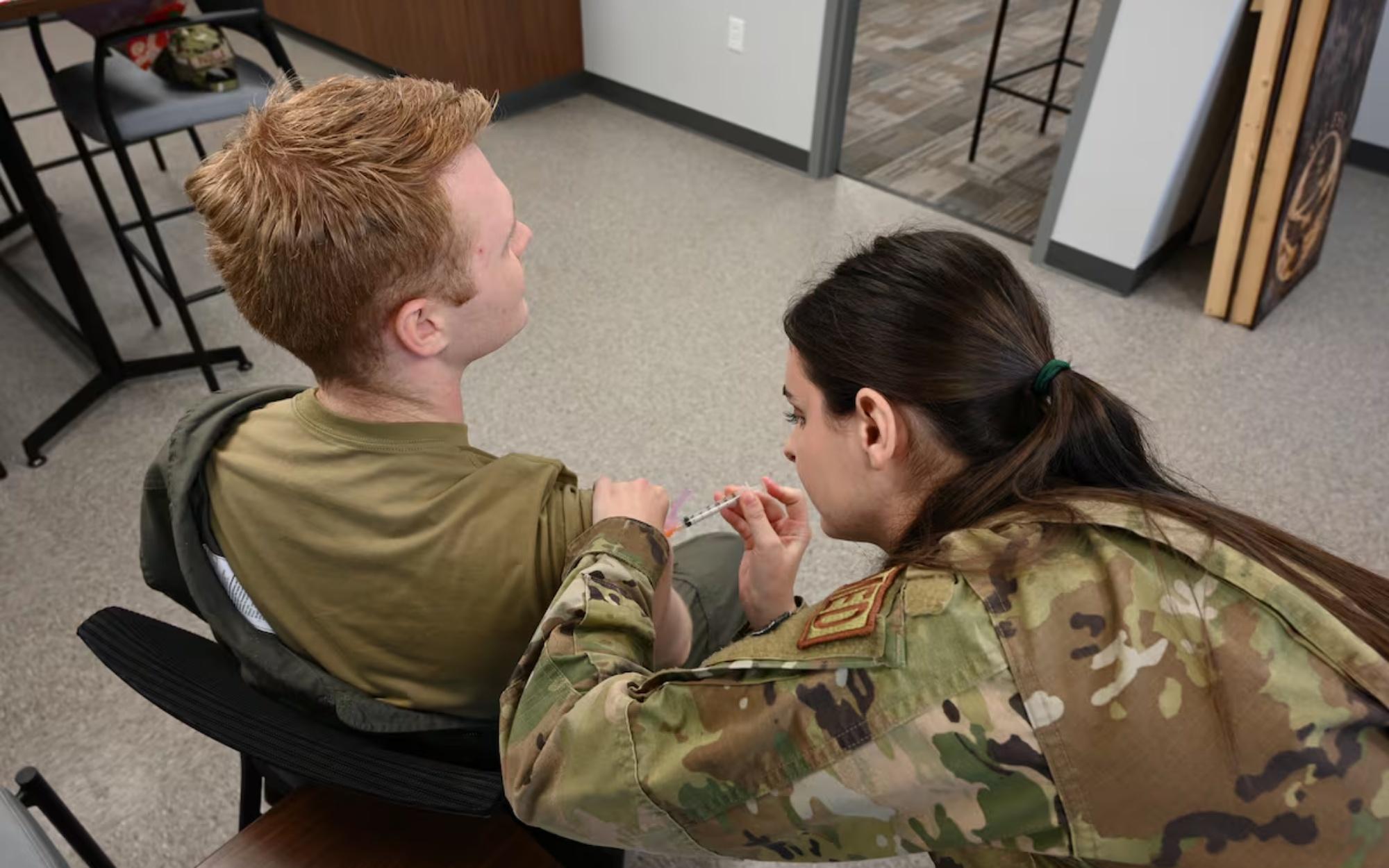
Despite April’s announcement that flu vaccination would be voluntary across all branches, the War Department has now reinstated the requirement for all new recruits entering basic training.
A Pentagon official confirmed that this reversal falls under an “exception to policy” granted to the military services, meaning that every recruit will once again have to roll up their sleeve before taking their oath.
The move has sparked confusion within the ranks and some frustration among those who saw Hegseth’s original decision as a return to personal liberty in the armed forces.
According to Pentagon spokesman Sean Parnell, all four services received exemptions allowing them to reimpose the requirement at boot camps. This means the Army, Navy, Air Force, and Marine Corps will all demand flu shots for incoming trainees.
The Navy was first to publicly confirm the decision, stating that the requirement was approved by the Under Secretary of War.
“Navy recruit training currently includes the Influenza vaccine as an exception to policy approved by the Under Secretary of War,” a Navy official told Task & Purpose. That’s bureaucratic language for: the Pentagon says it’s optional—unless you’re new.
The shift comes after reports of flu outbreaks among Air Force trainees. On June 16, one Air Force basic trainee died of flu-like symptoms at Lackland Air Force Base in San Antonio, Texas.
A Congressman later claimed that over 200 recruits were sick at the same installation. When the policy had been voluntary, only about 40 percent of trainees at Lackland had decided to take the shot.
An Air Force spokesperson admitted that medical teams have been scrambling to contain the outbreak.
“Over the last three weeks, the 37th Training Wing, in close coordination with the 59th Medical Wing, has been managing a localized influenza outbreak among trainees at Basic Military Training,” the spokesperson said. The base has reportedly implemented isolation and treatment measures for those showing symptoms.
Even so, this explanation raises more questions than it answers. Were the outbreaks significant enough to justify a complete reversal of policy? Many in the ranks suspect that risk aversion, not readiness, drove this swift change in direction.
Undersecretary of Personnel and Readiness Anthony Tata reportedly signed off on the exceptions for multiple departments, including the Army, Navy, Air Force, Space Force, NSA, and War Health Agency. According to Parnell, those decisions were made after “thorough risk assessments” meant to safeguard “operational readiness, lethality, and force generation.”
In short, it’s the standard Washington language that always appears before another mandate.
Hegseth’s initial directive in April had been celebrated by many troops who saw it as a long-overdue correction to years of heavy-handed vaccine orders.
After all, in the Biden-era Pentagon, vaccine mandates became a political flashpoint, creating tension between civilian leadership and the rank-and-file warriors tasked with defending the nation.
Hegseth’s new policy had symbolized a cultural restoration—a belief that America’s fighting men and women could be trusted with their own health decisions.
Now, however, the War Department seems intent on sending the opposite message to new recruits. Instead of treating them as responsible adults preparing for service, the bureaucracy appears to view them as liabilities needing constant government supervision. It’s a sharp contrast to Hegseth’s philosophy of building tough, self-reliant warriors.
Medical personnel at Lackland did confirm they are treating affected trainees with Tamiflu, an antiviral medication used to ease flu symptoms. But even as they do, questions remain about whether the War Department’s response is proportionate.

Mandating a medical procedure for tens of thousands of recruits because of one tragic death may show more concern for political optics than genuine operational necessity.
Ironically, this episode also places the Pentagon at odds with its own stated goal of empowering the services to manage health decisions locally.
The fact that the services are rushing to comply with “exceptions to policy” granted from Washington proves that the centralized reflex remains alive and well.
Many in the military community see Hegseth’s broader effort—to restore freedom, strengthen morale, and end unnecessary mandates—as a fight worth having. Internal pushback like this only shows how deeply rooted Washington’s bureaucratic instincts remain.
The War Department can insist that this is about readiness, but every soldier, sailor, and airman watching knows what it truly is: another reminder that the Pentagon struggles to let go of control once it’s had a taste of it.